TAMPA - Did you know that the first driverless trains to carry travelers inside an airport started running in Florida more than half a century ago? When the new Tampa International Airport opened on 15 April 1971, automated shuttles with no one at the controls carried passengers between its central terminal and the satellite buildings where they boarded their planes. Their successors are still doing the job today.
The shuttles were the heart of a new kind of airport. Traffic at Tampa passed one million passengers a year for the first time in 1962, and the Hillsborough County Aviation Authority set three requirements for a new terminal: very short walking distances, room to expand in modules, and an eventual capacity of 20 million passengers a year, airport historian Marnix Groot wrote on AirportHistory.org. The answer was a landside and airside layout, with parking, ticketing and baggage in a main terminal ringed by separate airside buildings at the gates, linked by an automated people mover. Work began on 28 October 1968, and the complex cost $83 million.
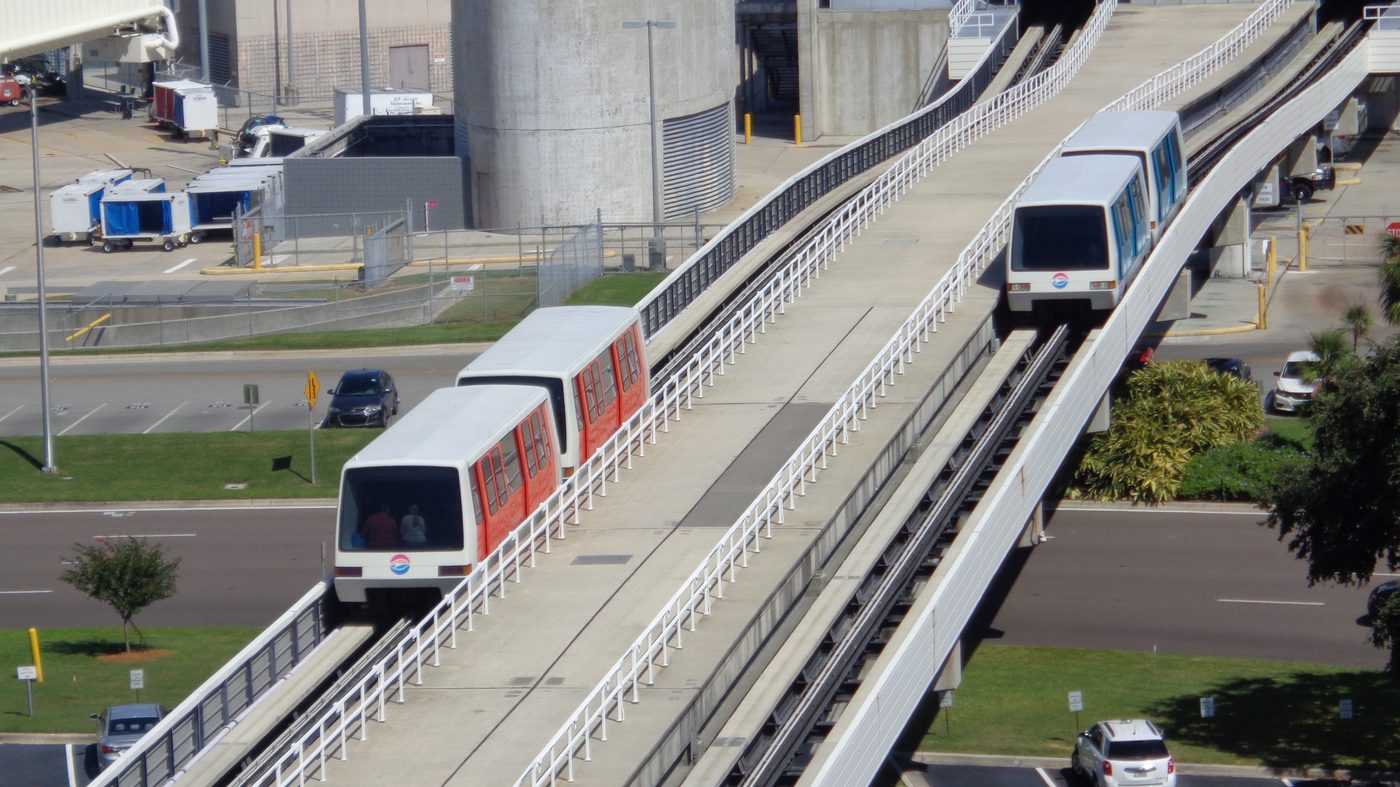
Westinghouse Electric built the system. Eight first-generation C-100 vehicles ran on elevated guideways about 1,000 feet long, two to each airside, at speeds of up to 30 miles per hour. Each car carried 100 standing passengers, the trip from the main terminal took 42 seconds, and a pair of shuttles could move 840 passengers in each direction every 10 minutes, enough to unload two Boeing 747s, Groot wrote. No gate was more than 200 feet from a shuttle station.
"TPA's signature shuttles go back to our opening in 1971, and were the first of their kind at any airport in the world when they debuted," Michael Stephens, the airport's chief executive, said in March. Alstom, which now builds the cars, described Tampa's 1971 system as the first time a driverless transportation system was employed at an airport anywhere in the world, an innovation it said has been widely imitated and is now a standard feature of airport design.
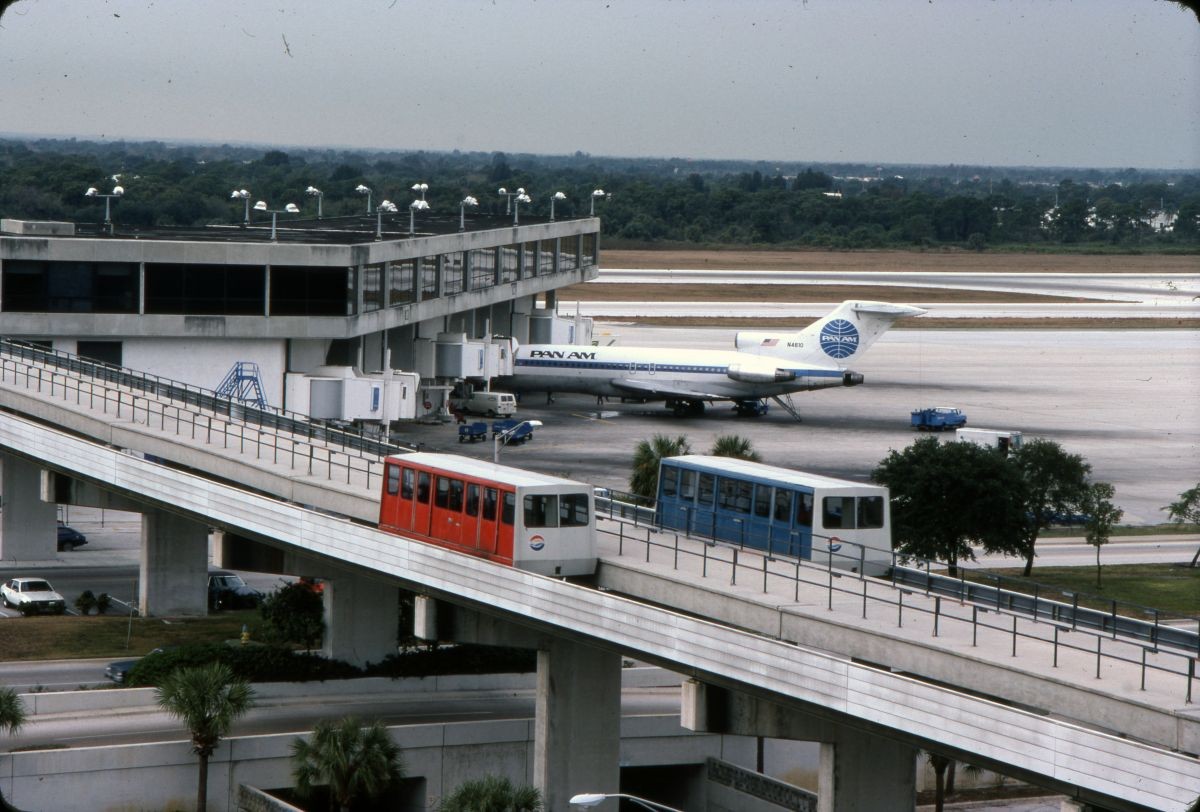
The original cars are long gone. Airside F brought two-car trains in 1987, and the last of the first-generation Westinghouse vehicles were retired in the 1990s, when newer CX-100 cars took over. The people mover business changed hands over the decades and is now part of Alstom, which acquired Bombardier's transportation division in 2021. The 1990s cars ran for well over 1 million miles each, according to the airport.
This year Tampa began replacing them with a third generation. New Innovia APM 300R cars, built at Alstom's plant in West Mifflin, Pennsylvania, near the site where the first people movers were developed and tested in the 1960s, entered public service as the Blue shuttles to Airsides A and C on 13 March. Both the Red and Blue shuttles there were open to the public by the end of August, the airport said, at a cost of $61 million for the two airsides. Airside E is scheduled to follow later this year, and new cars have been ordered for an Airside D due to open in 2028.
Long before robotaxis began picking up riders at airport curbs, Tampa travelers were stepping onto trains with no driver and reaching their gates in 42 seconds.