MIAMI - Did you know that downtown Miami has run a driverless rail system since April 1986, and that for more than two decades it has cost riders nothing? Metromover, Miami-Dade County's elevated people mover, opened to the public on 17 April 1986 with small automated cars circling a 1.9-mile loop above the city's core and nobody at the controls.
Fluor, which managed construction while Westinghouse Electric held turnkey responsibility for the $148 million project, calls Metromover the nation's first fully automated inner-city transit system. The ribbon-cutting came 10 years after the project was first conceived and 58 months after construction began, according to the company. The opening fleet was 12 automatic cars running at up to 30 miles per hour, with a full lap of the loop taking about 10 minutes. A 1985 paper in the American Society of Civil Engineers' Journal of Urban Planning and Development, written while the system was being built, described it as the first automated guideway transit system in a U.S. downtown environment.
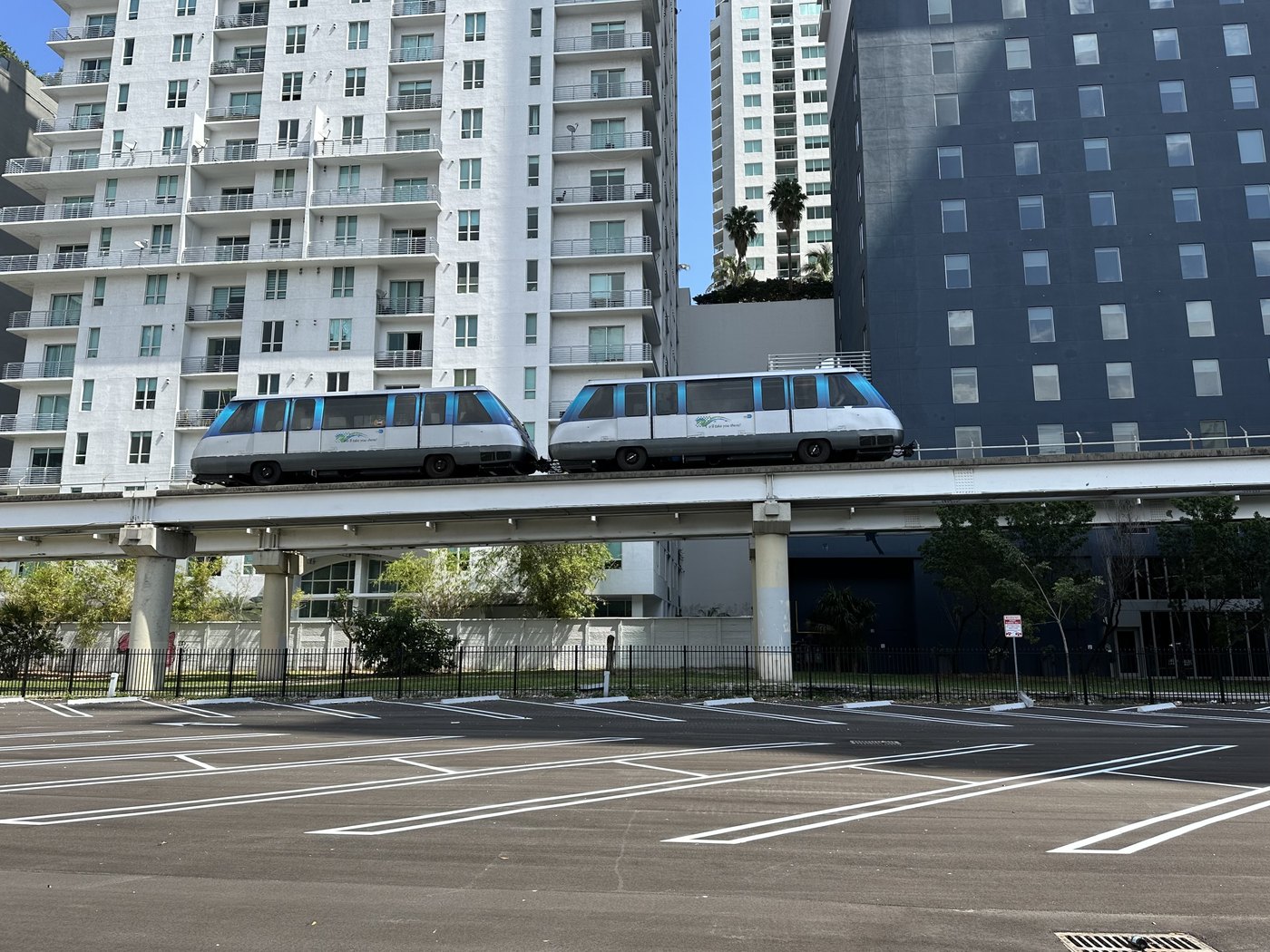
The loop grew in 1994, when extensions north to the Omni area and south to Brickell opened. Today the county's Department of Transportation and Public Works runs Metromover as three connected loops, Omni, Inner and Brickell, serving 21 stations from Financial District Station in Brickell to School Board Station in the Omni area. Cars arrive every 90 seconds at rush hour and every three minutes off-peak, seven days a week, and the system links with Metrorail at Government Center and Brickell stations.
The fare is the other curiosity. On 5 November 2002, Miami-Dade voters approved a half-cent sales surtax to fund the People's Transportation Plan, and one of its promises was fare-free Metromover service for all passengers. The Citizens' Independent Transportation Trust, which oversees the surtax, says the old fare of $0.25 per boarding brought in $440,830 on about 4.8 million rides. Once the fare was gone, annual ridership climbed to around 9 million. The trust's latest five-year plan records 6.55 million riders in fiscal 2023 as the system recovered from the pandemic.
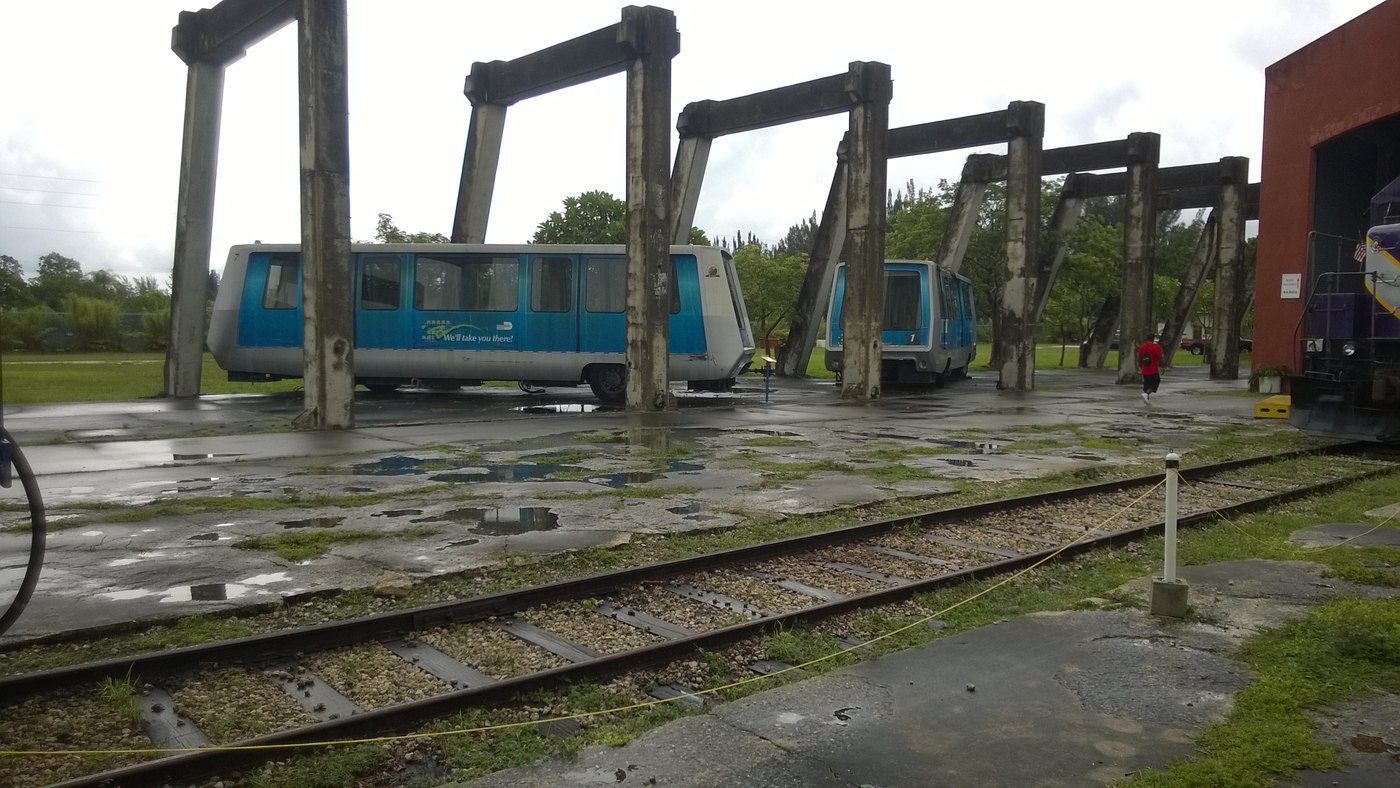
The county says Metromover has expanded and its vehicles have been replaced over the years, but the major subsystems that keep the automated people mover running had reached the end of their design lives. On 4 May 2021, county commissioners awarded Bombardier Transportation a contract worth up to about $152.9 million to overhaul the wayside system, including automatic train control, data transmission, power distribution, track switches and the central control center. The stated goal is to extend the system's life by another 30 years.
That is the curiosity for a robotaxi era. Decades before driverless cars began picking up paying riders on American streets, Miami was already moving riders around its downtown in computer-run cars with nobody up front, and since the 2002 vote it has done so for free. The April 1986 opening remains the milestone: a fully automated loop above a U.S. downtown, still running 40 years on.