HONOLULU - Did you know that the first driverless metro in the United States runs not in New York or Chicago but along the south shore of Oahu? When Honolulu's Skyline opened to riders at 2 p.m. on 30 June 2023, its four-car trains set off between East Kapolei and Halawa with no one at the controls. They have run that way ever since.
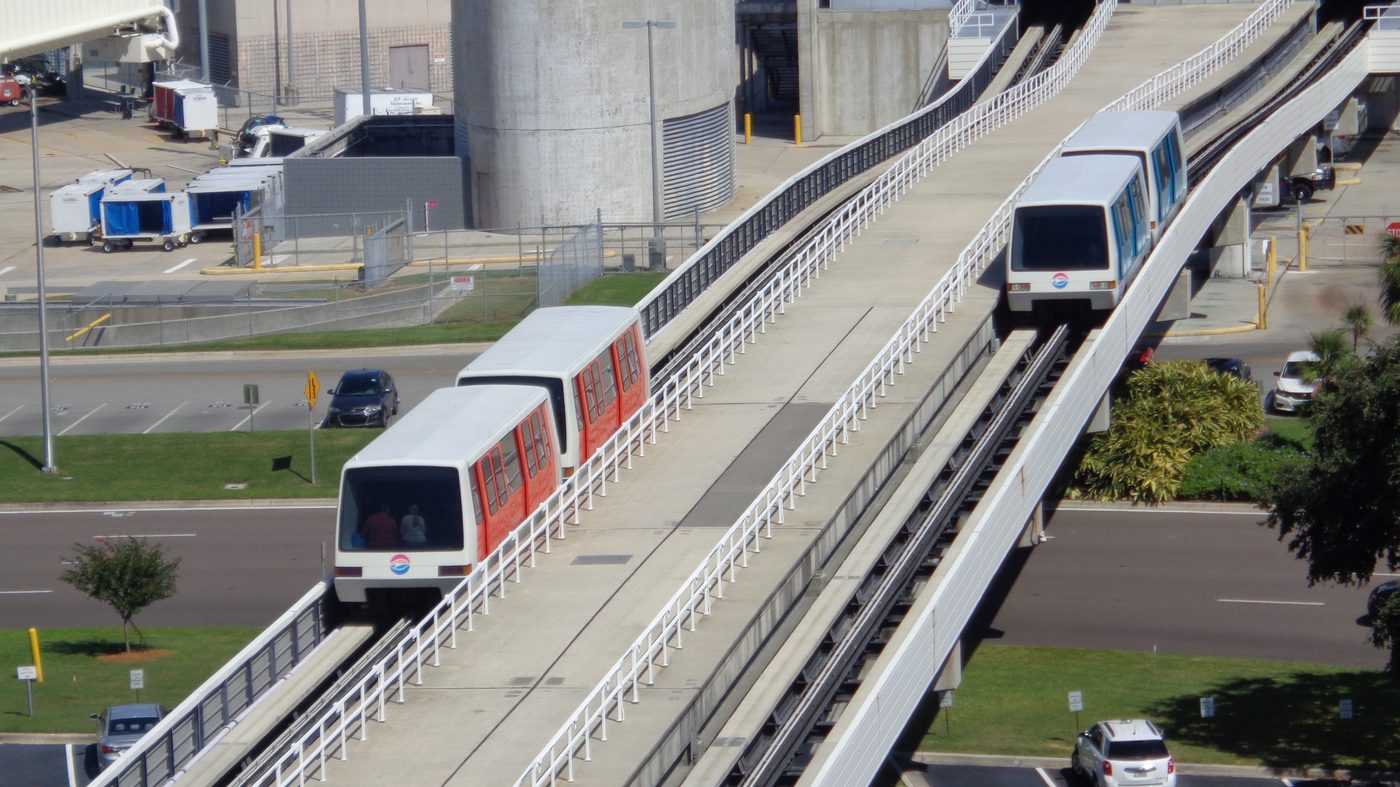
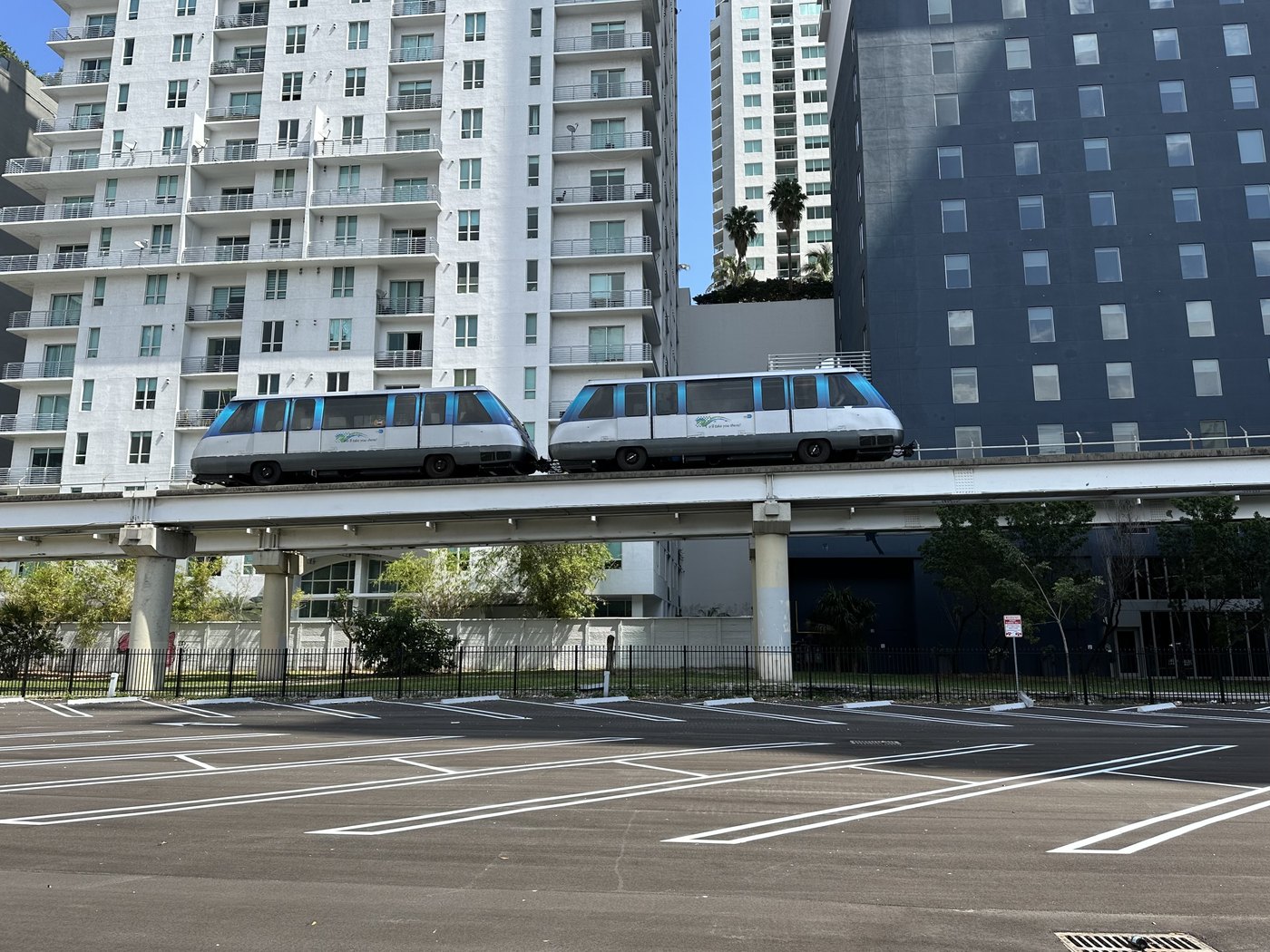
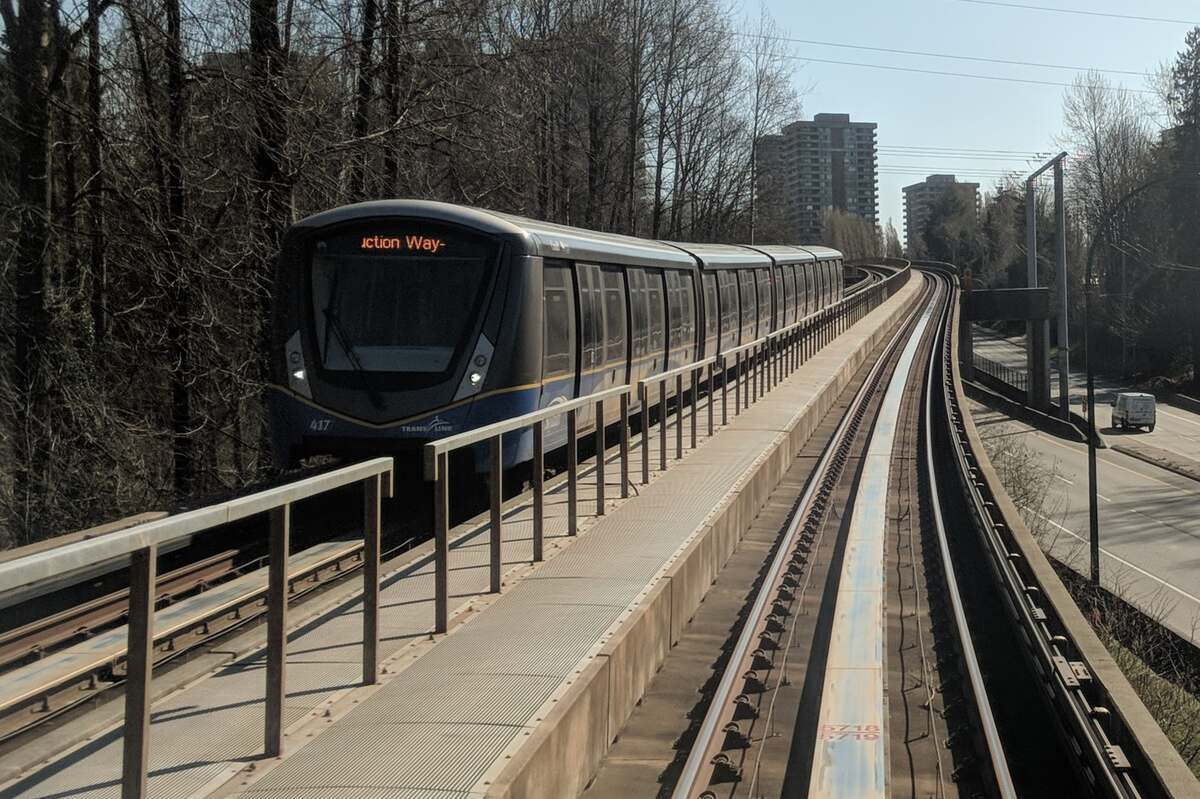
Hitachi Rail, which built the trains and systems and operates the line, called Skyline "the first fully autonomous metro system in the United States" when it opened. It set Skyline apart from the driverless people movers that had carried riders for decades, mostly at airports. Skyline, it said, was the first true mass transit system in the country to run at GoA4, the grade of automation for fully driverless operation. "Delivering the US' first ever fully autonomous rail system is an extremely proud moment for Hitachi Rail," Giuseppe Marino, the company's chief executive, said.
Others used similar language. Lori Kahikina, chief executive of the Honolulu Authority for Rapid Transportation, or HART, which built the line, credited Hitachi with helping to deliver "the first fully automated driverless commuter rail system in the country." Paul Skoutelas, president of the American Public Transportation Association, told the opening ceremony that building a rail project "is not for the faint of heart," particularly, the Honolulu Star-Advertiser reported, when it is the country's first fully autonomous metro. In July, the city's Department of Transportation Services marked Skyline's third birthday by calling it "the nation's first fully automated, elevated rail transit system."
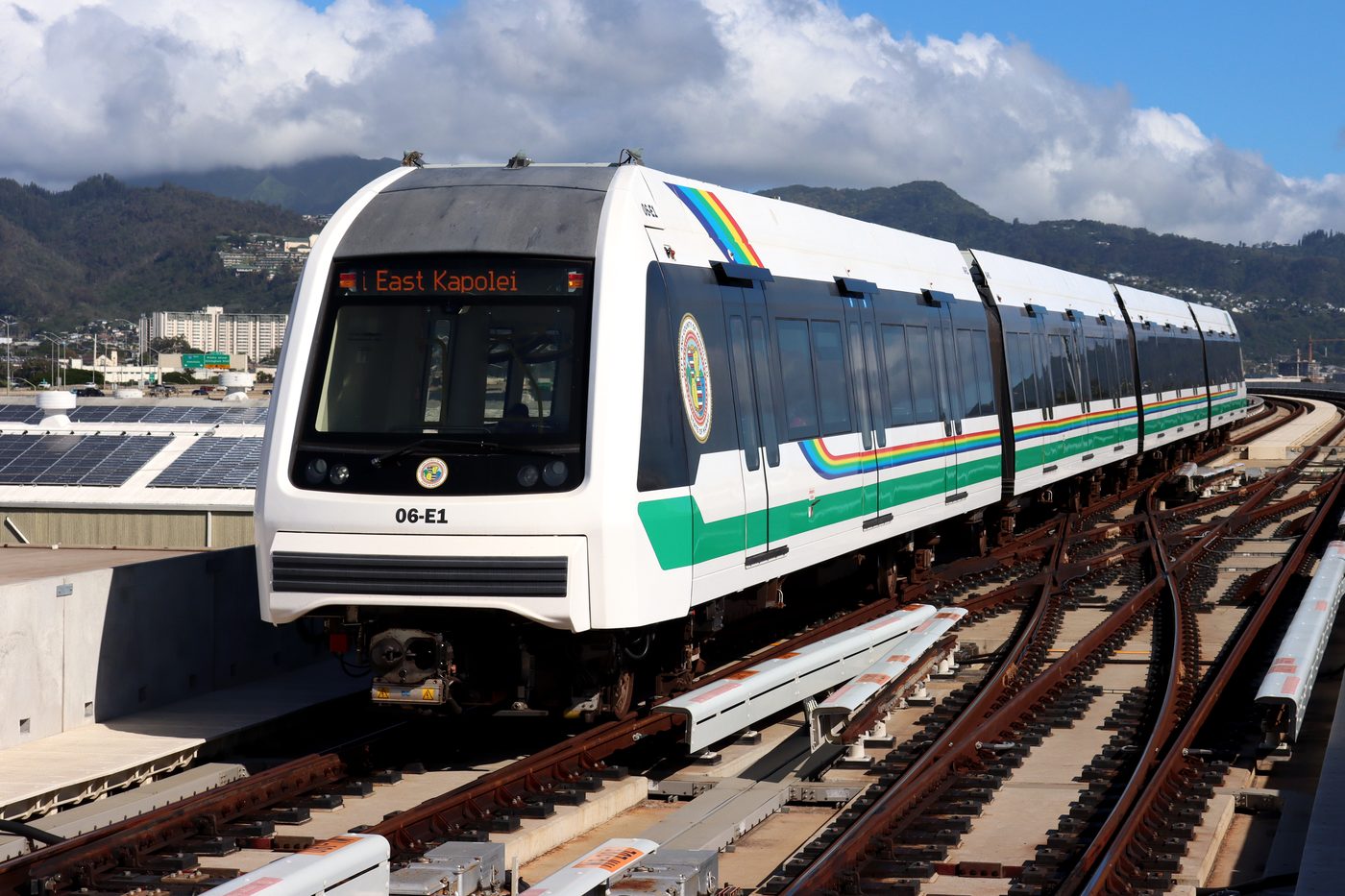
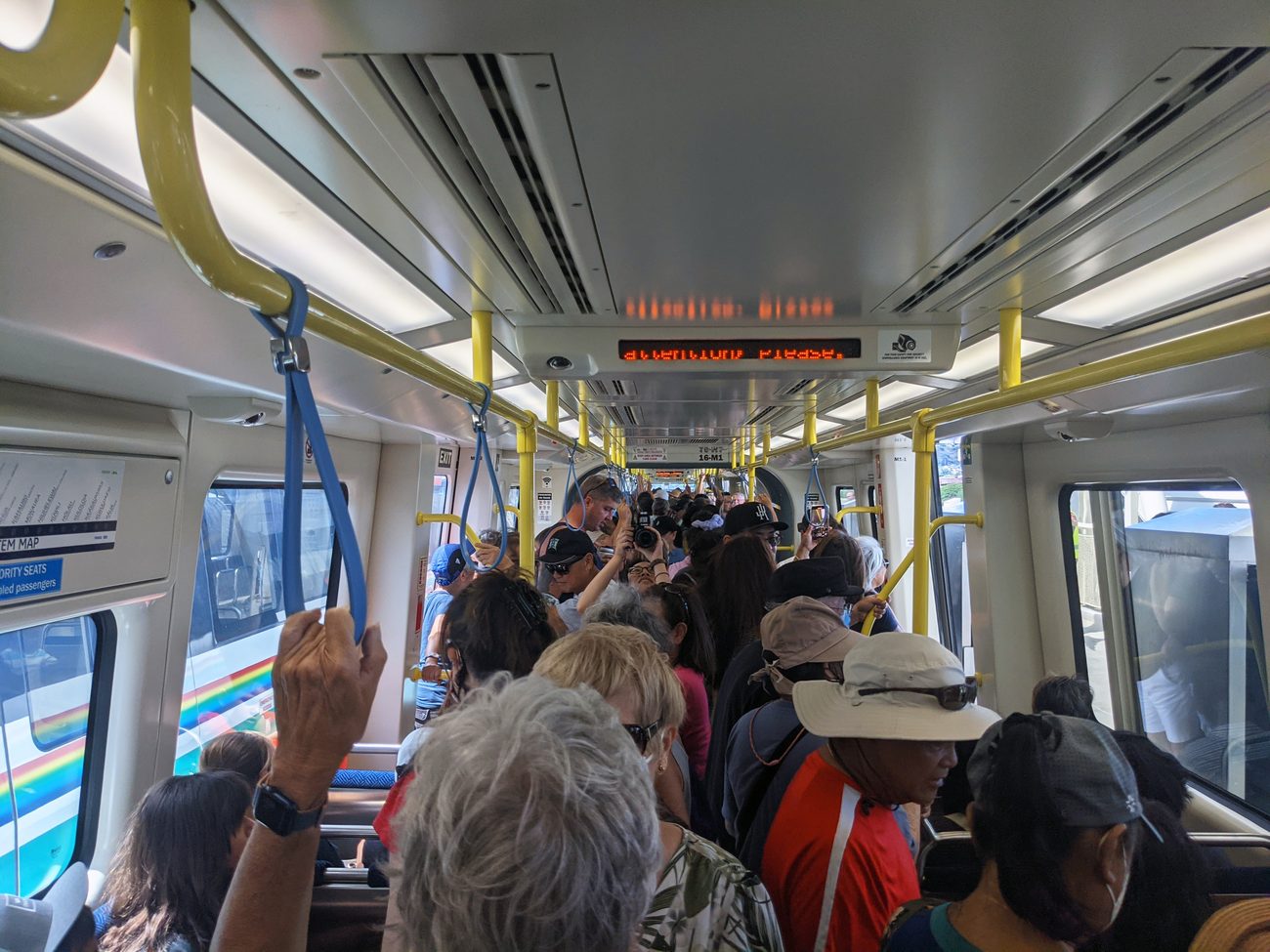
The first stretch ran about 10.75 miles on an elevated guideway through nine stations, from East Kapolei through Waipahu and Pearl City to Halawa, at Aloha Stadium. Hitachi built a fleet of 20 four-car trains, each 260 feet long with room for up to 800 passengers and space for bicycles, surfboards and luggage. Every train movement and track switch is managed from a single control room staffed around the clock, the company said. Rides were free through the Fourth of July, and by 2:20 p.m. that first afternoon a line of more than 1,000 people snaked around Halawa station, the Star-Advertiser reported.
It was a long time coming. Voters endorsed a steel-wheel rail system in 2008 and ground was broken in 2011. By opening day the Star-Advertiser put the cost of the full system at nearly $10 billion, the largest public works project in Hawaii's history. Hitachi called it the first new major metro system to open in the United States since 1993.
On 16 October 2025, a year ago tomorrow, Skyline pushed 5.2 miles east to four more stations: Makalapa, for Joint Base Pearl Harbor-Hickam; Lelepaua, at Daniel K. Inouye International Airport; Ahua, at Lagoon Drive; and Kahauiki, at the Kalihi Transit Center on Middle Street. The line now covers 16 miles and 13 stations, according to HART, and trains run from 4 a.m. to 10:30 p.m. daily.
Riders have followed. The city says Skyline carried more than 5 million passengers in its first three years and now averages nearly 12,000 riders on weekdays, with more than 99 percent service reliability. On 26 August, as the fall university semester began, it recorded 14,143 rides, its highest weekday total to date, the Star-Advertiser reported, citing the Department of Transportation Services.
Construction is now underway on a third segment of 3 miles and six stations through Kalihi, Iwilei, Chinatown and downtown to a temporary terminus at Civic Center in Kakaako, with passenger service projected for 2031. The last two stations of the original plan, at Kakaako and Ala Moana Center, were postponed under a 2022 recovery plan accepted by the Federal Transit Administration; HART says future phases will include the extension to Ala Moana.
More than three years in, the trains that glide past Pearl Harbor on their way into town still carry no driver at all.