BARSTOW - Did you know that the first big race for self-driving vehicles ended with no winner at all? At dawn on 13 March 2004, 15 robot vehicles left a starting gate in the desert outside Barstow, California, in the DARPA Grand Challenge. None of them made it even eight miles.
The Defense Advanced Research Projects Agency, the Pentagon's research arm, had laid out a 142-mile course across the Mojave Desert to Primm, Nevada. It promised $1 million to the first team whose vehicle finished in under 10 hours, with nobody steering or touching it. Teams were handed a map of the route, marked with hundreds of waypoints, two hours before the start, Wired reported. DARPA's longer aim was technology that could one day take people out of dangerous jobs such as military supply convoys.
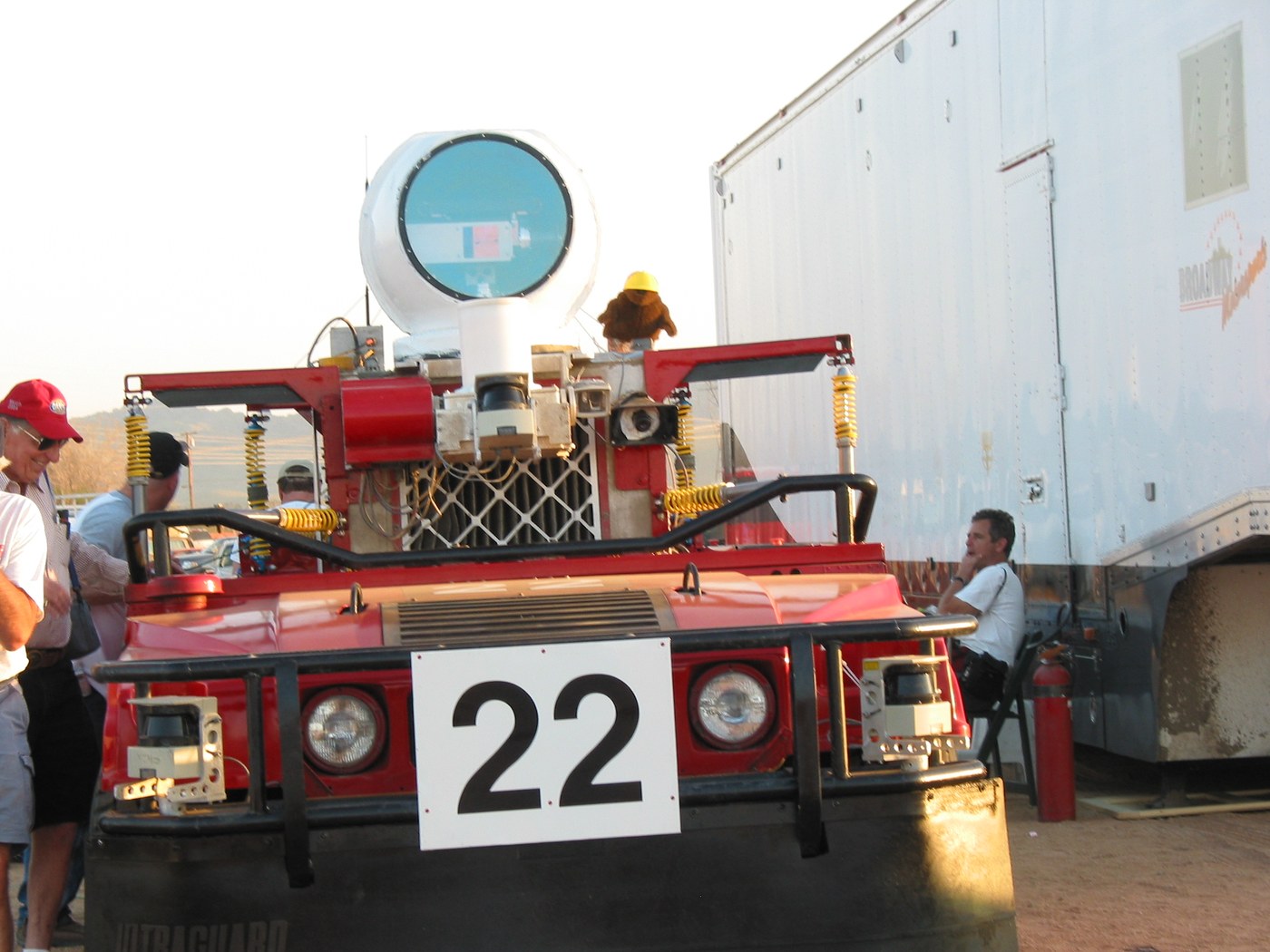
Carnegie Mellon University's Red Team went first in Sandstorm, a converted Humvee. It covered about seven miles of mostly flat desert in its first 15 minutes, according to Wired. Then, coming off a switchback in the hills, it high-centered on the berm at the edge of the trail. The impact broke both front half shafts and shredded both front tires, and fuel began to leak, the university said. Sandstorm had gone 7.4 miles, the farthest of the day. Team leader William "Red" Whittaker said the robot had rolled over in practice a week earlier and its navigation system had never fully recovered.
The rest of the field did worse. Most vehicles made it less than a mile before stalling, overturning or running off course, Wired reported. A six-wheeled robot from a Louisiana team was disqualified after it tangled in barbed wire, and Virginia Tech's converted golf cart stopped within 100 yards of the start when its brakes seized. Earlier that week only seven of the 21 teams trying to qualify had finished a 1.36-mile obstacle course at the California Speedway in Fontana. The race was over in about four hours, and the prize went unclaimed.
DARPA announced a second race the next day. On 8 October 2005, 21 years ago this week, five of the 195 teams that entered finished a 132-mile course in southern Nevada. Stanford University's Stanley, a modified Volkswagen Touareg from a team led by Sebastian Thrun, won the $2 million prize in 6 hours, 53 minutes and 58 seconds, an average of 19.1 miles per hour. Second place, about 11 minutes behind, went to Sandstorm, the same Humvee that had stuck on a desert berm 19 months earlier, the Los Angeles Times reported.
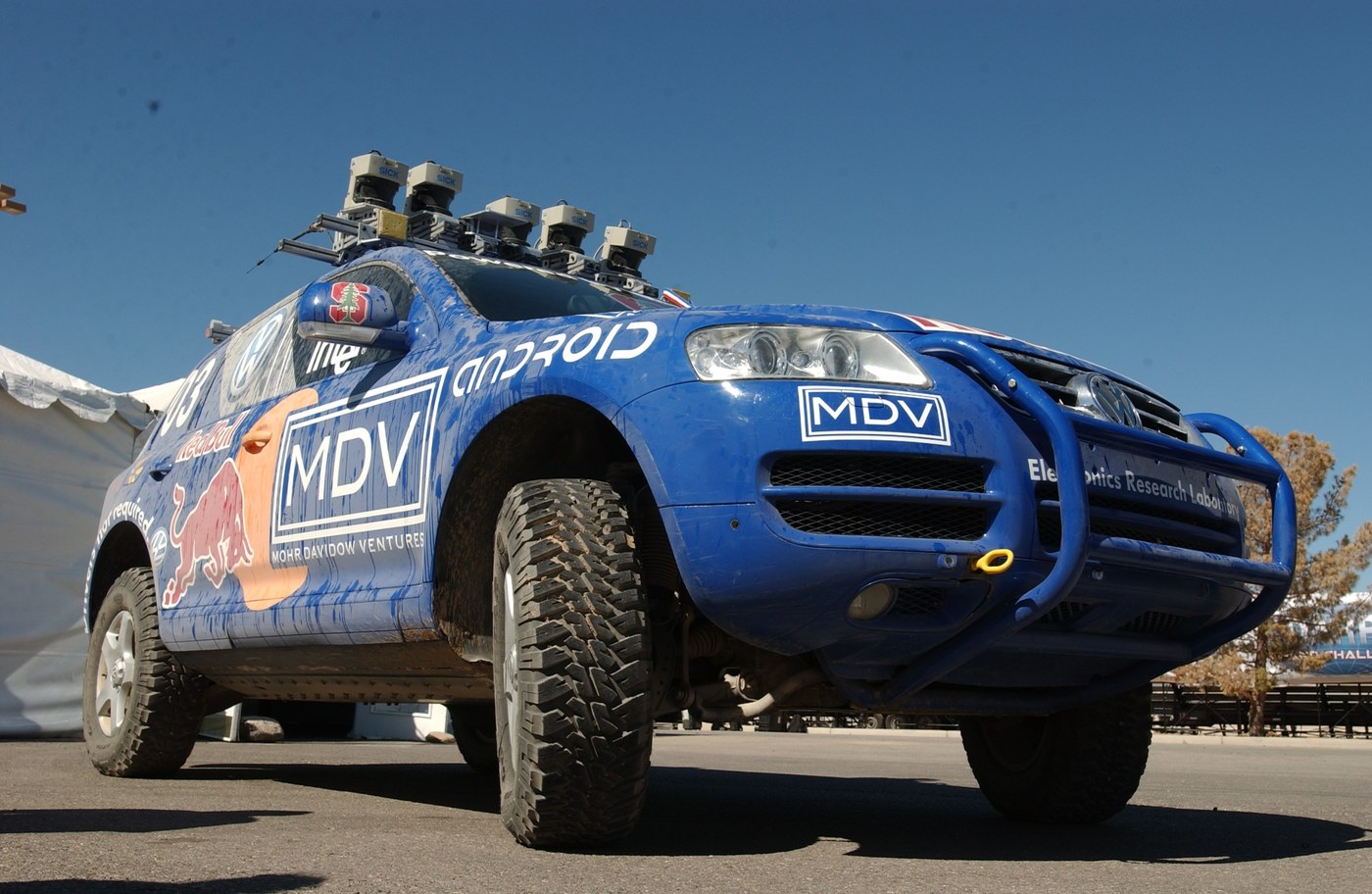
Stanley now belongs to the Smithsonian. The National Museum of American History says nearly 100 people at Stanford and Volkswagen's Electronics Research Laboratory in Palo Alto worked on it, and that it found its way with a course map of about 3,000 points of latitude and longitude, plus roof-mounted laser sensors, video cameras, radar and GPS receivers. Two years after Stanley's win, DARPA's Urban Challenge moved the contest into a mock city in Victorville, California, where robots had to share the road with other traffic.