CHENNAI, India - The first stretch of Chennai's second-phase metro network is now carrying passengers on trains built to run with no one in the cab, though two operators ride aboard every train for now and city officials say fully driverless service is not expected until the middle of next year.
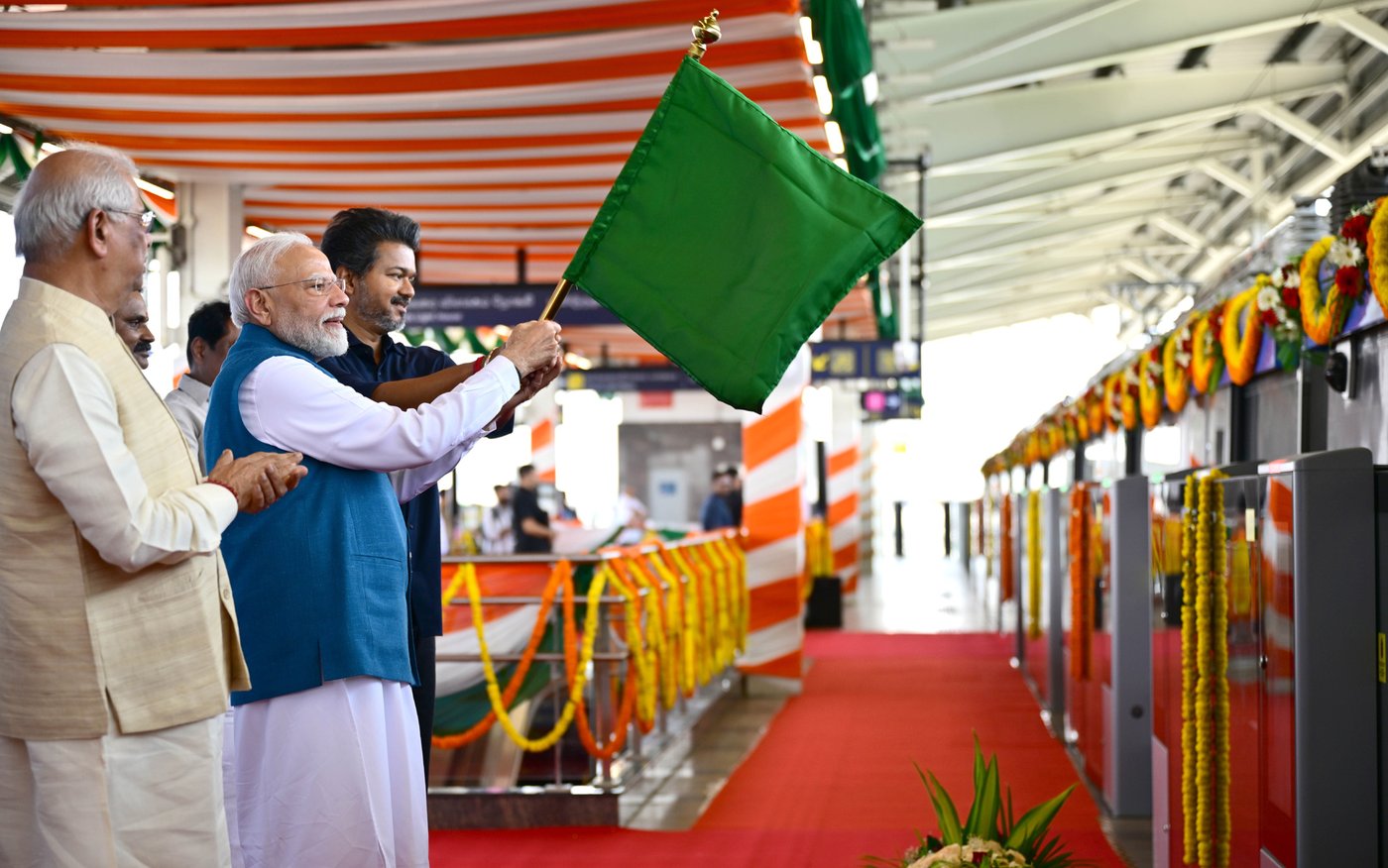
Prime Minister Narendra Modi and Tamil Nadu's chief minister, C. Joseph Vijay, flagged off the first train at Porur Bypass station on Oct. 11 and rode it to Poonamallee Bypass and back, The Times of India reported. The 14.64-kilometer elevated stretch, which runs from Poonamallee Bypass in the western suburbs to Vadapalani, opened to the public at 4 p.m. that day.
It carried 25,474 passengers in its first five hours, officials of Chennai Metro Rail Limited, the state-run operator, told The Hindu. Poonamallee Bypass station recorded nearly 4,800 riders and Porur Junction about 4,000.
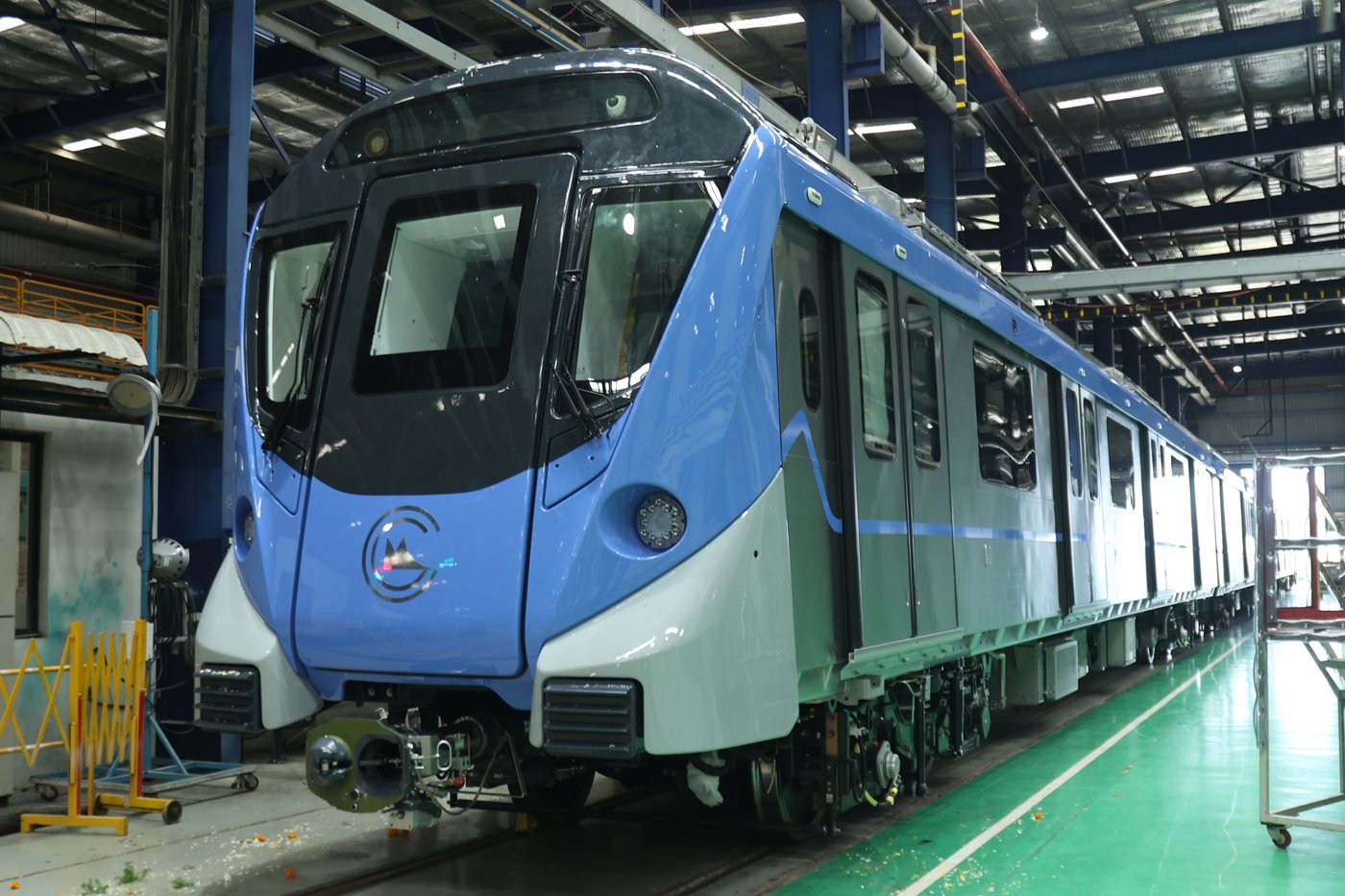
The trains are Alstom Metropolis sets, designed at the French company's engineering center in Bengaluru and built at its plant in Sri City, Andhra Pradesh. Alstom said on Oct. 12 that it had finished manufacturing all 36 three-car trainsets for the line, known as Corridor 4, under a contract awarded in 2023 and valued at 124 million euros. The last trainset is due to be delivered by the end of October. The trains are configured for driverless operation at up to 80 kilometers an hour, the company said.
The line is not yet running that way. The trains were designed for unattended train operation, the highest grade of metro automation, but are starting in automatic train operation mode with two operators on board, The Times of India reported ahead of the opening. In that mode acceleration, braking, stopping and speed are automated, while staff stay aboard to monitor the service and intervene when needed.
"We will have two operators onboard all the trains and operate them in degraded mode," a Chennai Metro official told the newspaper, explaining that operators would have to apply the brakes manually because the signaling system and the trains were not yet synchronized. "We will go driverless by mid-2027."
The second operator monitors signals and assists in emergencies, the official said. About 120 test scenarios for unattended operation must be validated before the operator applies to the Commissioner of Metro Rail Safety for certification, and testing continues at night after passenger service ends. Once the trains run unattended, functions including door control and routine train movements will be handled automatically under the supervision of an operations control center in Koyambedu, with a backup center in Nandanam.
The line uses communication-based train control, automatic train protection and platform screen doors. Delhi Metro is currently the only system in India that runs unattended train operation, according to The Times of India.
Trains run from 7 a.m. to 9 p.m., every 10 minutes at peak times from Monday to Saturday and every 15 minutes otherwise. Fifteen trains were to operate at the start. The top fare between Vadapalani and Poonamallee Bypass is 40 rupees, and a trip from Poonamallee Bypass to the airport, Egmore or Chennai Central costs 50 rupees, with riders changing to the first-phase network at Vadapalani.
Only 11 of the stretch's 17 stations are open. Six stations on a 3.7-kilometer double-decker section between Porur Junction and Vadapalani are not yet operational, and trains pass through them without stopping.
The opening came nearly six years after the foundation stone for the 118.9-kilometer second phase was laid in November 2020. When complete, Corridor 4 will run 26 kilometers from Poonamallee Bypass to Light House across 28 stations, Alstom said. The company is also starting work at Sri City on 96 more driverless Metropolis cars for Chennai that were ordered in 2025.
Alstom has supplied Chennai's metro since 2010, including 208 cars and the signaling and power systems for the 54-kilometer first phase. "The commencement of passenger service on Chennai Metro Phase II is a proud moment for Alstom and a testament to our enduring partnership with CMRL," said Olivier Loison, the managing director of Alstom India.
For riders along the corridor, the change was immediate. E. Sivaramakrishnan, who lives in Kattupakkam, told The Hindu that his commute to work in Vadapalani, which used to take more than an hour on his two-wheeler, took 20 minutes on the new line. "This is unbelievable," he said, though he added that the Arcot Road entrance at Vadapalani station had still not opened, leaving him with a long walk.