TOKYO - The construction company Taisei and the self-driving software developer TIER IV will run three autonomous vehicles together on a government test track and inside a full-scale test tunnel this autumn, a step in Japan's plan to build road space where cargo moves with no one at the wheel, the companies said on Wednesday.
The eight-day trial, scheduled for late October to early November, is part of a demonstration program run by the Ministry of Land, Infrastructure, Transport and Tourism for what it calls the Autoflow Road, a freight system that would carry goods in unmanned, automated vehicles on space set aside for logistics. Taisei, TIER IV and the road builder Taisei Rotec said the ministry had selected them for this year's round.
The vehicles will run on straight and curved sections of the test track and in the full-scale tunnel at the National Institute for Land and Infrastructure Management, the ministry's research institute in Tsukuba, northeast of Tokyo. They will follow one another, stop in line, pass in opposite directions, run side by side, pass stopped equipment, split and merge, and steer around and overtake objects meant to stand in for fallen cargo. The team will also check how precisely the vehicles stop and how much lane width they need, testing a standard width, an intermediate width and a minimum width.
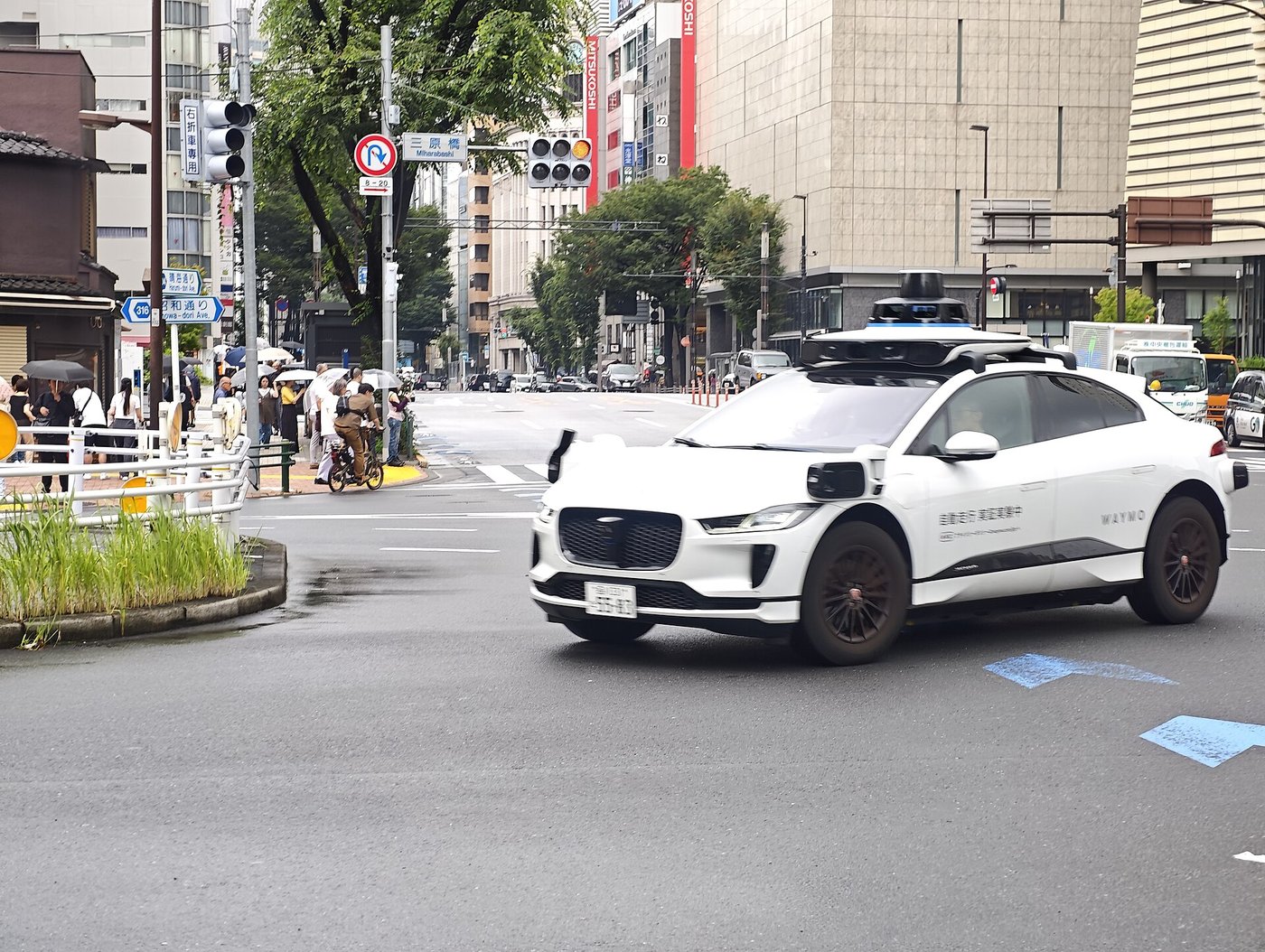
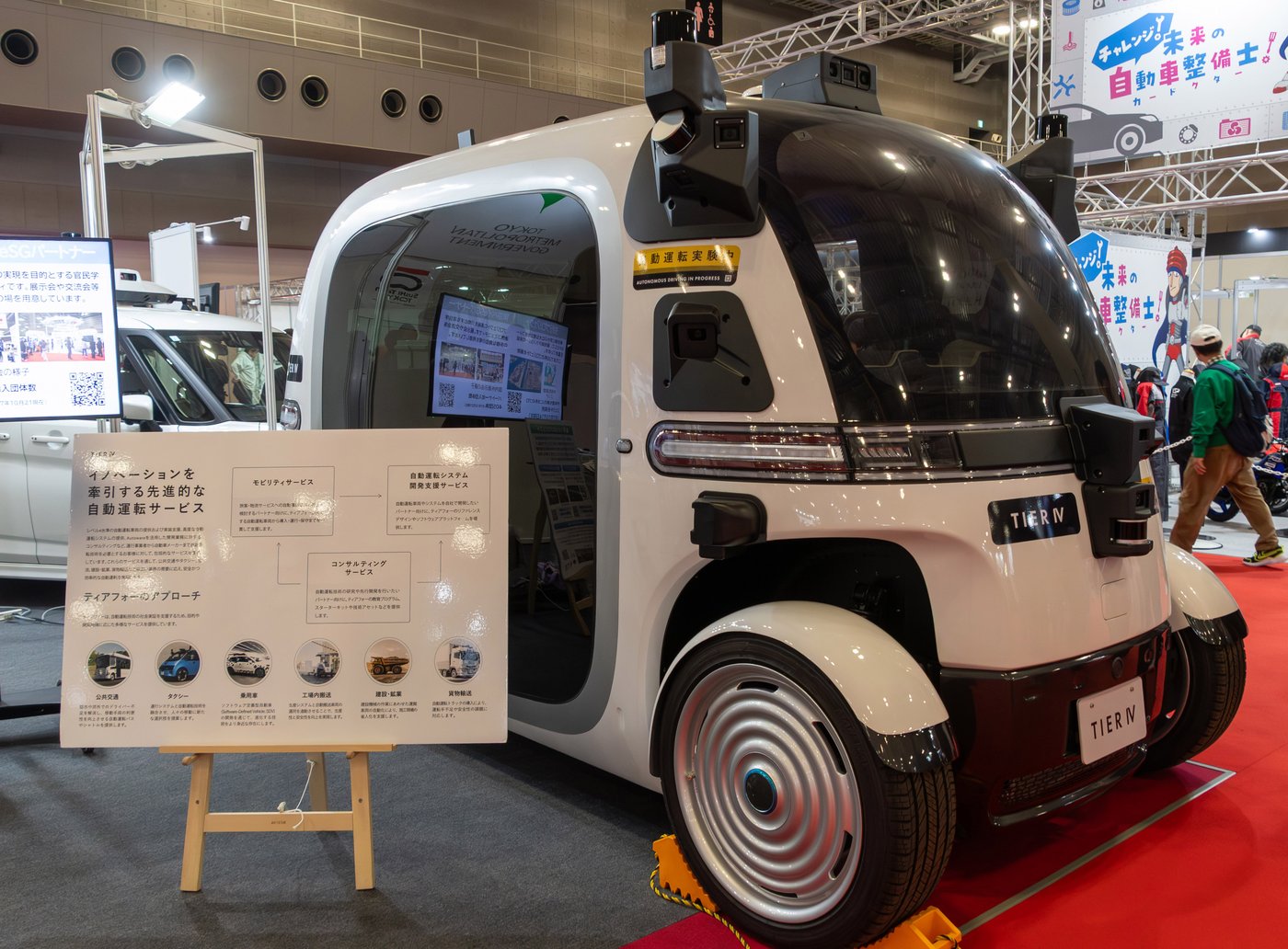
The cars are not the machines that would one day haul freight. The companies said the trial uses passenger-car-based test vehicles to check how the driving and control systems cope with several vehicles at once, and that it is separate from any future choice of dedicated cargo equipment. TIER IV is supplying the vehicles and its Pilot.Auto driving system, which is built on the open-source autonomous driving software Autoware. TIER IV will also handle the driving setup and analyze the data.
A second aim is to find out how much equipment a closed lane can do without. A self-driving car on a public road has to cope with pedestrians, cyclists and every other kind of traffic. In a space reserved for freight, the companies want to test whether the sensors on the vehicles and the equipment along the road can be pared back. Taisei will test T-Localizer, its system for helping a vehicle pin down its own position, and Taisei Rotec will plan, install and measure the reflectors it relies on. Taisei Rotec has also developed paint that the vehicles' lidar sensors can pick up more easily, according to the release.
The three companies took part in last year's round, pairing a TIER IV vehicle with T-Localizer and with T-iPower Road, Taisei's system for charging vehicles wirelessly while they move. They said those tests confirmed that the technologies could be applied and brought operating problems to light, which they did not describe. They said this year's plan is based on the application they submitted to the ministry and could change.
They are one of seven participants the ministry selected in September. Others include a group of Shimizu, IHI and Nomura Real Estate; a group of Kajima, Mitsubishi Electric, Seino Transportation and Dynamic Map Platform; and a group of Chiba Prefecture, Narita International Airport Corporation, Obayashi, Cuebus and NTT Data. Logisnext and Toyota Industries are studying cargo handling at freight hubs. The ministry said the driving tests would use at least three vehicles each and were scheduled to take place at the Tsukuba test track or inside Narita International Airport between October and December.
The ministry is pursuing the Autoflow Road as an answer to a shortage of truck drivers, made worse by a shrinking population and new limits on overtime, and as a way to cut carbon emissions. Its final report on the plan cites an estimate that Japan will be short of trucking capacity equal to 900 million tons of freight in fiscal 2030, and says the system could cover roughly 8 to 22 percent of the future shortfall.
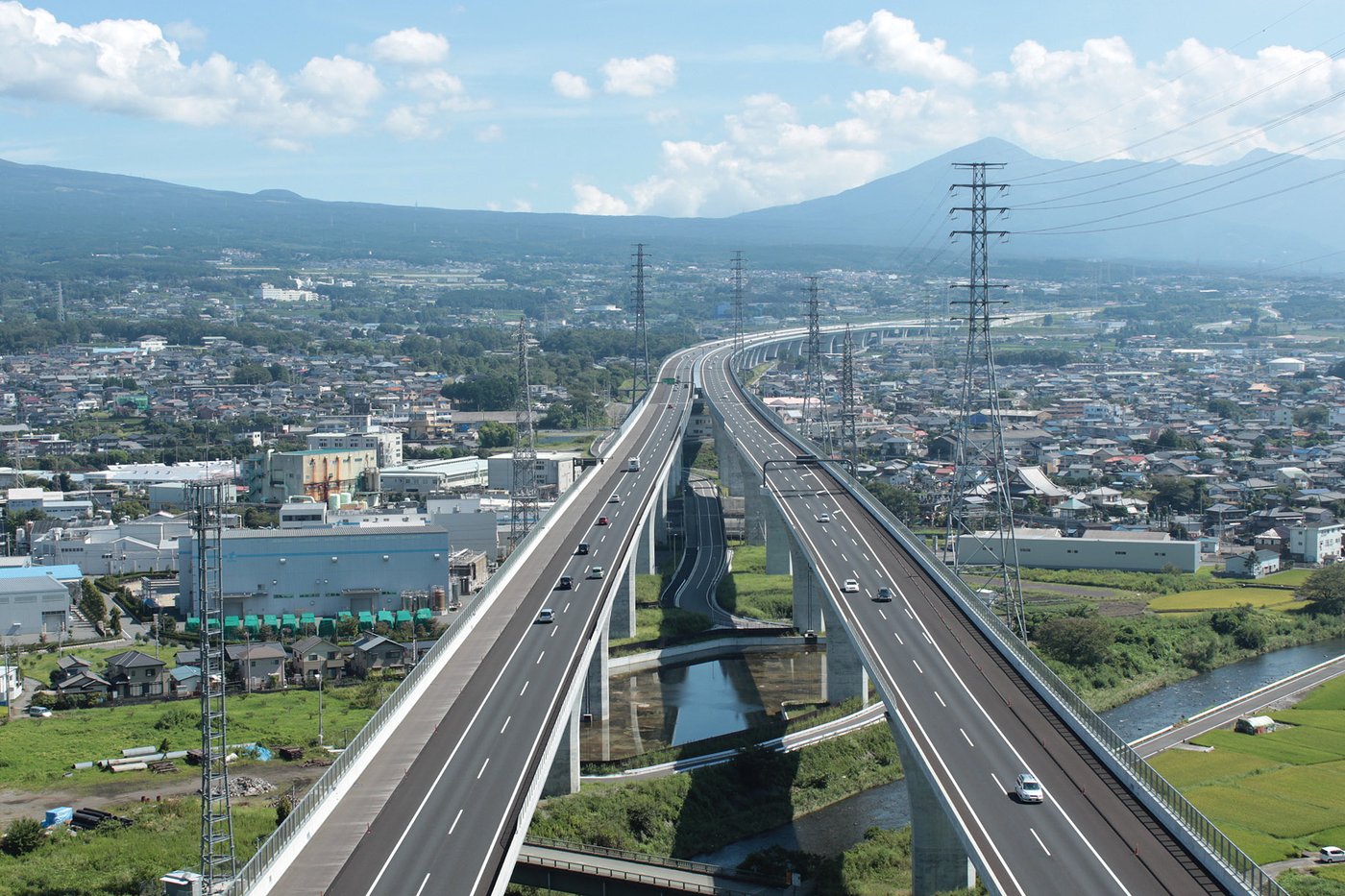
The plan centers on the corridor between Tokyo and Osaka, which carries more freight than any other in Japan. The report calls for experiments on unfinished sections of the Shin-Tomei Expressway through fiscal 2027, and for a first route, one that can be built with small-scale improvements, to begin operating by the mid-2030s. Goods would ride on standard pallets stacked up to 2.2 meters high, and the ministry is aiming for speeds of 70 to 80 kilometers an hour, which it says will require new technology.
The tunnel at the Tsukuba institute is 700 meters long, and the test track runs about 6.2 kilometers, according to the institute. The companies said they would use the results to sort out which functions belong on the vehicles and which on the road, and to work toward simpler systems suited to a lane built only for freight.