WASHINGTON - The U.S. Department of Transportation has granted Aurora and other self-driving truck companies a five-year exemption from a federal rule that requires a driver to set out reflective triangles around a stopped truck, letting them rely instead on flashing warning beacons mounted on the cab, Reuters reported late Wednesday.
The rule assumes a person is aboard. When a commercial truck stops on a highway shoulder or in a travel lane for anything other than a necessary traffic stop, federal regulations require the driver to switch on the hazard flashers and, within 10 minutes, place warning triangles or flares at set distances behind and ahead of the truck. A truck running with no one in the cab cannot do that.
The department said the cab-mounted beacons offered an equivalent or greater level of safety, according to Reuters. Companies that plan to use the exemption must notify the Federal Motor Carrier Safety Administration beforehand and disclose any crash involving a truck while the beacons were switched on or should have been. The agency said it would revoke the exemption if it led to a lower level of safety than before it was granted.
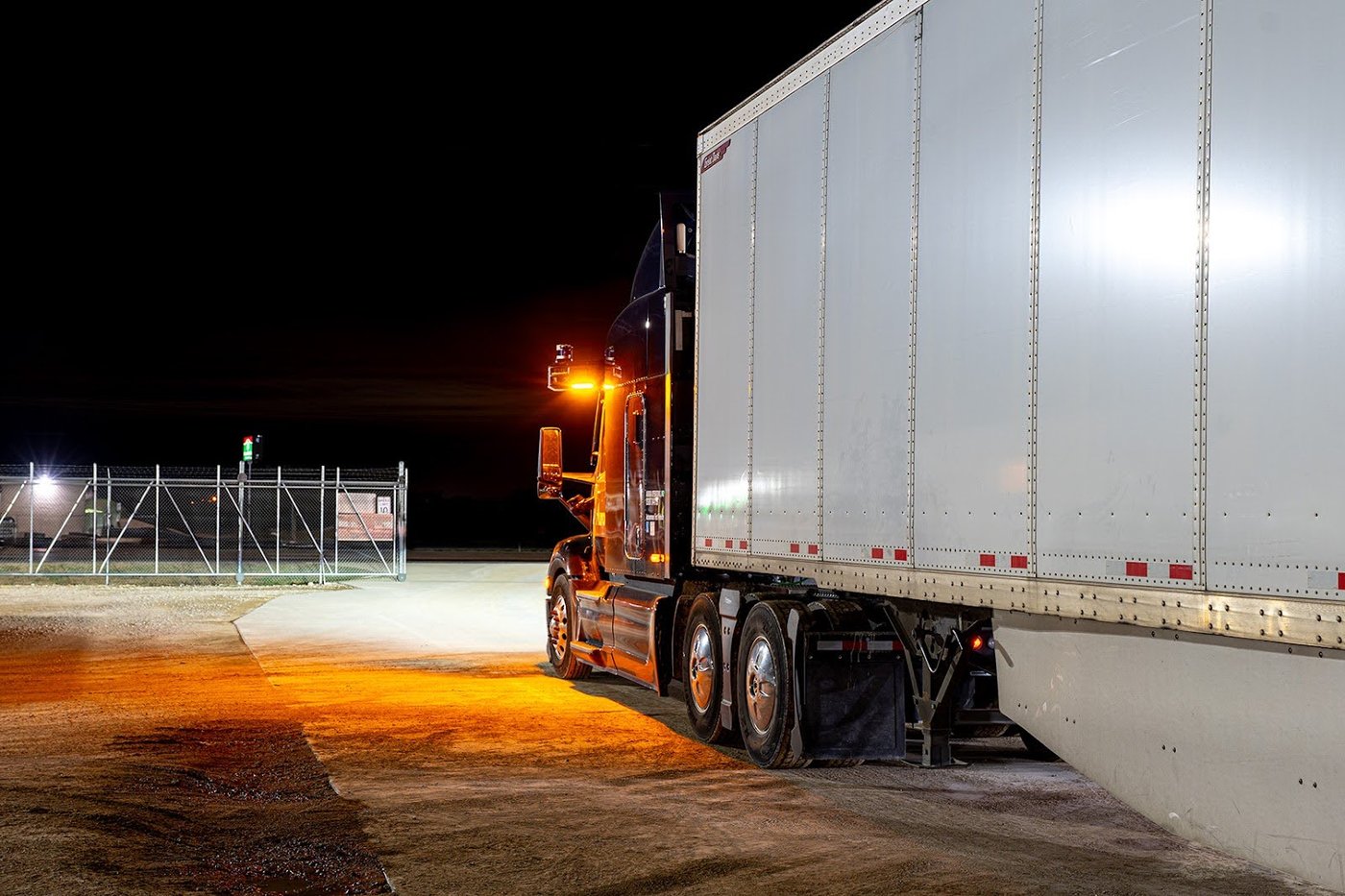
"High-visibility, cab-mounted warning beacons are a critical, 21st-century solution that enhances roadside safety by immediately alerting other road users without ever needing to put a person in harm's way," Aurora said in a statement on Wednesday, adding that the decision "underscores the government's recognition of the immense economic and community benefits of autonomous trucking."
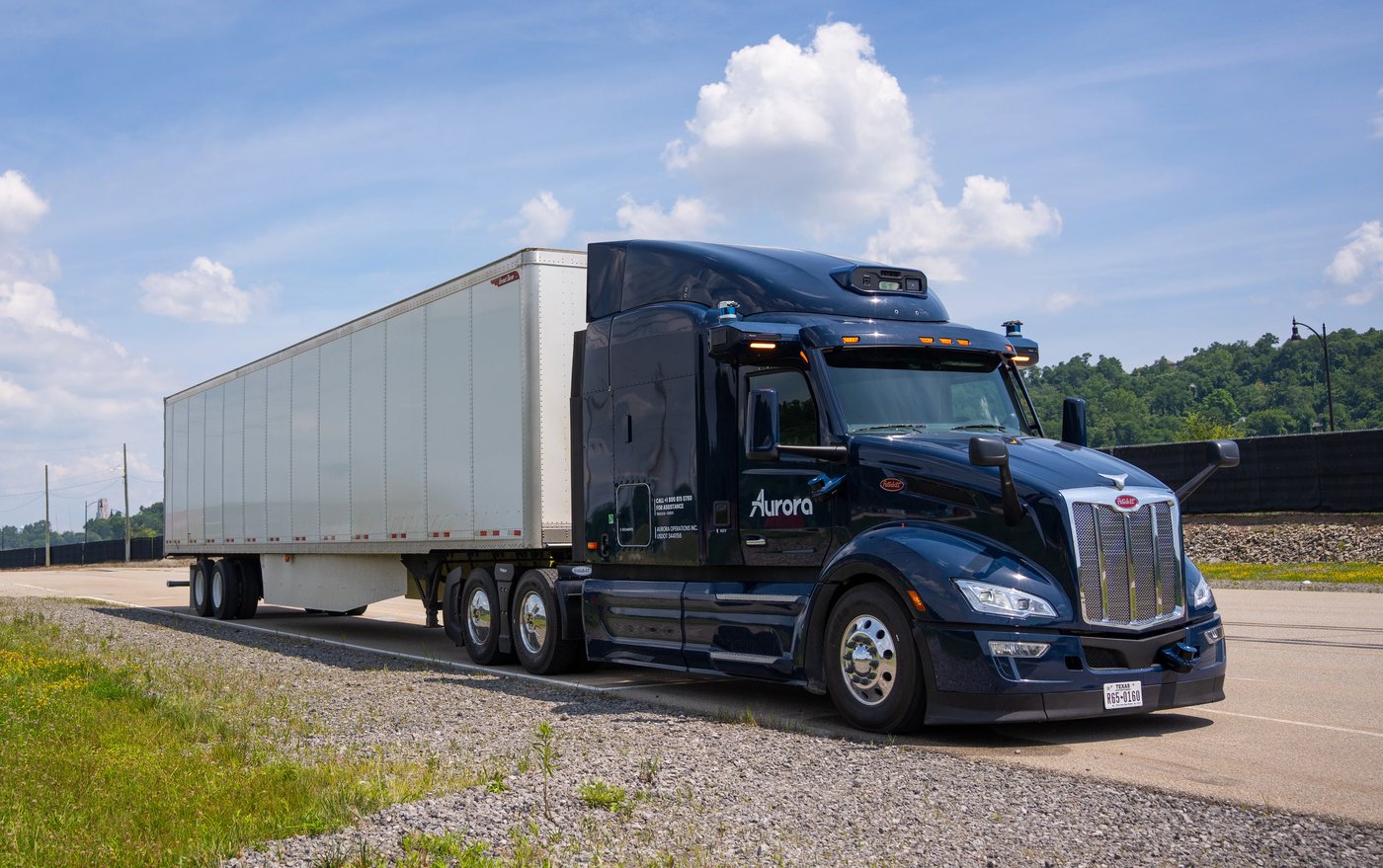
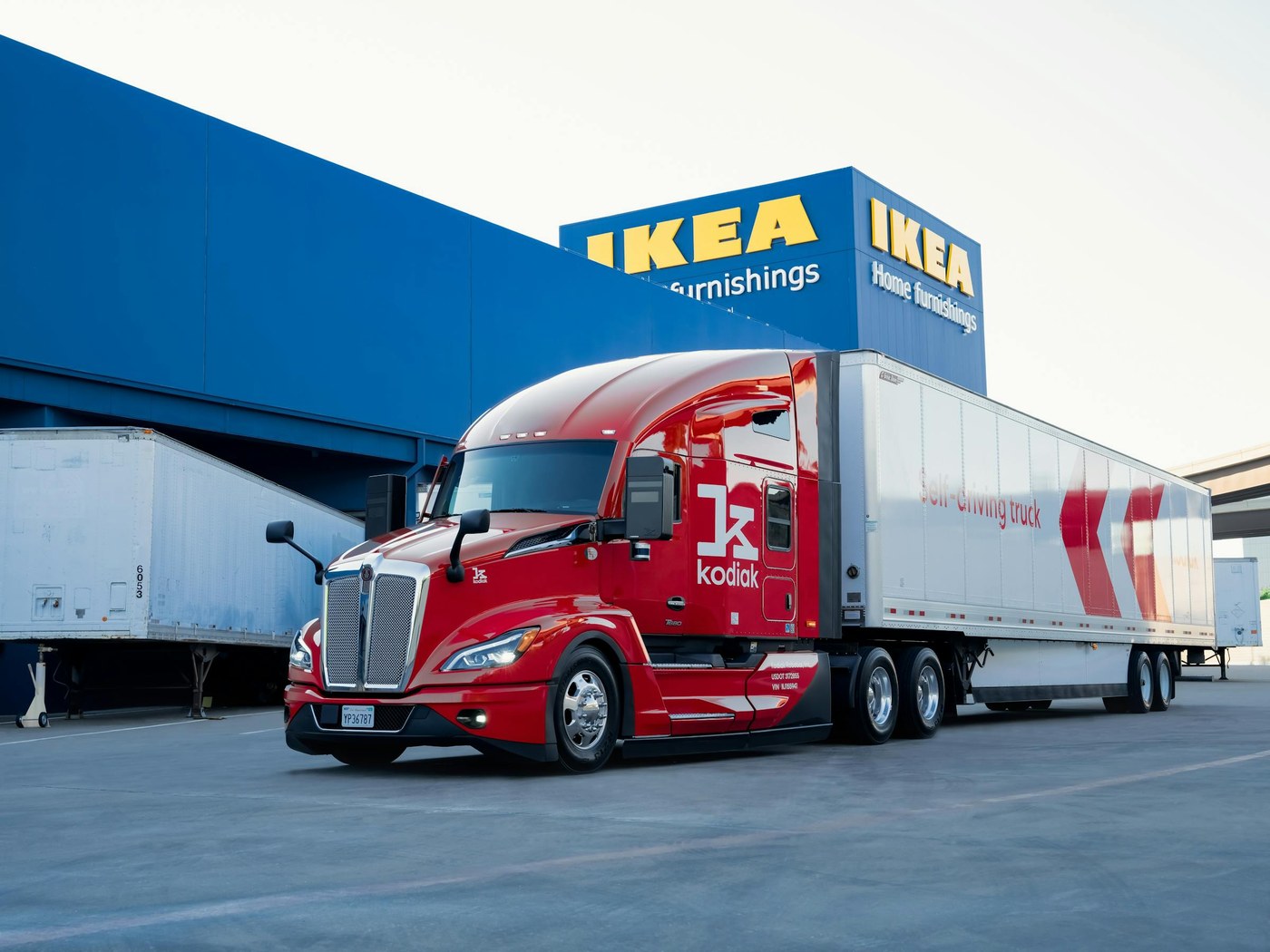
The decision replaces a string of short-term fixes. Since October 2025, the motor carrier agency had kept the beacons legal with a series of three-month waivers, each taking effect the day after the previous one lapsed. The latest was due to expire at 11:59 p.m. on Friday, Oct. 9, FreightWaves reported. Besides Aurora, three carriers had opted in to the waiver: Kodiak Robotics, Waabi Logistics and Stack AV.
Aurora and Waymo, the Alphabet self-driving unit, first asked for an exemption in 2023. The agency turned them down in December 2024, saying the application had not shown that the beacons would be as safe across the industry and raising questions about how visible they would be near curves and hill crests. Aurora sued the agency in January 2025 and dropped the case after the first waiver was issued. In April it filed a new application of its own, seeking five years.
In that application, published in the Federal Register, Aurora said it had used the beacons on 34 trucks that traveled more than 500,000 miles between Oct. 10, 2025, and Jan. 9, 2026, and that the lights were switched on for a total of nearly 10 hours without faults, malfunctions or power problems, to the company's knowledge. It said it had 109 Class 8 trucks and expected to have more than 200 trucks equipped for Level 4 automated driving by the end of 2026. Reuters said Aurora has about 20 self-driving trucks in on-road operations.
Truckers have pushed back. The Owner-Operator Independent Drivers Association opposed the 2023 request, arguing that beacons would not work if a truck stopped within 500 feet of a curve, Land Line Media reported. Last month an Illinois cargo van operator, Kostas Giannoulias, asked the U.S. Court of Appeals for the Seventh Circuit to halt the waiver and bar any successor. Justice Department lawyers for the agency argued that his chances of encountering a covered truck were "vanishingly small." The court had not ruled as of Oct. 2, FreightWaves reported, and it was not immediately clear how the five-year exemption would affect the case.
The grant had not been published in the Federal Register as of Thursday morning. The agency's rules require it to publish the decision there, including the exemption's effective period and all of its terms and conditions.