Tokyo’s First Empty Cab: Waymo Aims for Driverless Taxis in 2027
Alphabet’s Waymo, Japanese taxi-app operator GO, and taxi company Nihon Kotsu said they aim to launch Japan’s first fully autonomous commercial taxi service in Tokyo in 2027.
Alphabet’s Waymo, Japanese taxi-app operator GO, and taxi company Nihon Kotsu said they aim to launch Japan’s first fully autonomous commercial taxi service in Tokyo in 2027.
The partners plan to start with a small fleet and gradually expand to about 100 vehicles across key Tokyo neighbourhoods, subject to regulatory approvals and ongoing validation of Waymo’s technology and joint operations.
Once approvals are secured and the service is fully validated, rides would operate without drivers and be available through both the GO and Waymo apps, the companies said in a joint statement.
“From day one, this will be an unmanned service for the public,” Waymo co-chief executive Tekedra Mawakana told a joint briefing in Tokyo. “We’ll grow our fleet responsibly over time, steadily operating until anyone in Tokyo can download an app and take a ride.”
The 2027 target, the companies said, depends on permits from national and local authorities and on finishing validation of Waymo’s driving system and the three-way operation. Formal start dates would be set only after safety is confirmed and licenses required under Japan’s Road Traffic Act and Road Transportation Act are in hand.
Seven wards, then an empty cabin
The three companies announced a cooperation in December 2024. Since 2025 they have run public-road tests in seven Tokyo wards, adapting Waymo’s system to local streets. Waymo vehicles have been driving autonomously under supervision by trained Nihon Kotsu crew. Those tests, the partners said, are progressing; Tuesday’s agreement moves the work toward fully unmanned service for general customers.
Photo: Waymo / GO / Nihon Kotsu
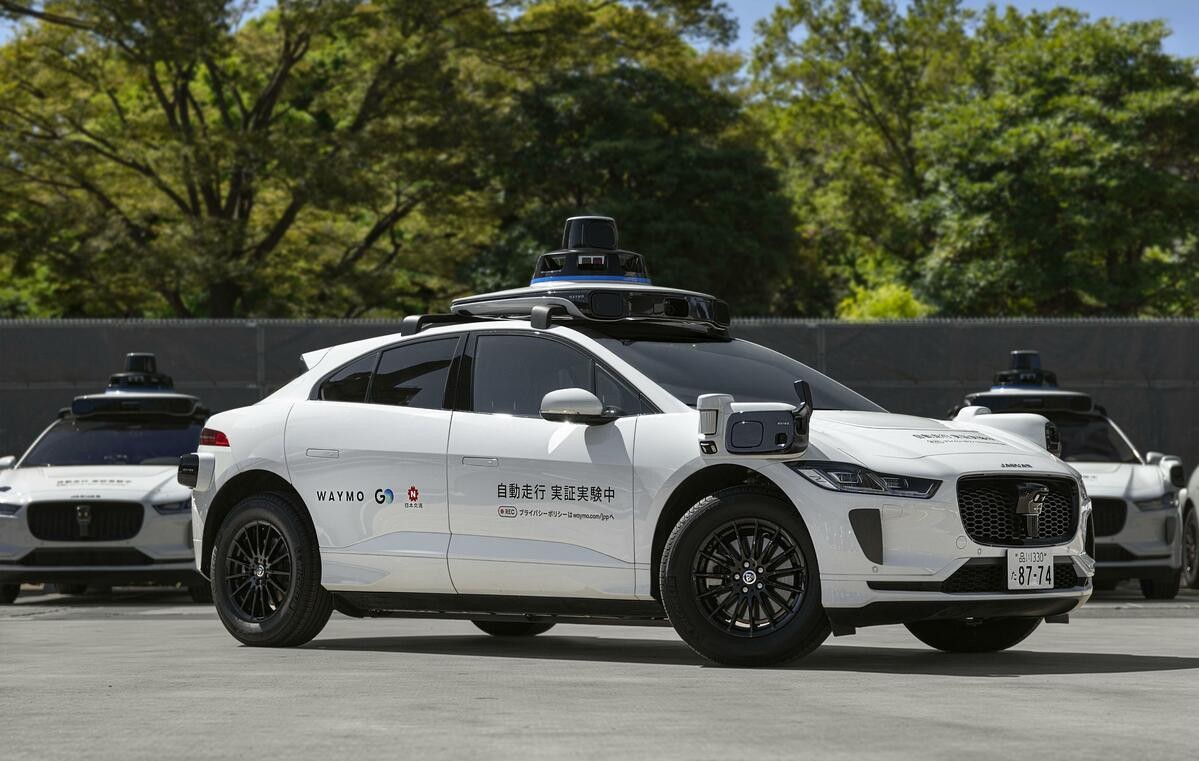
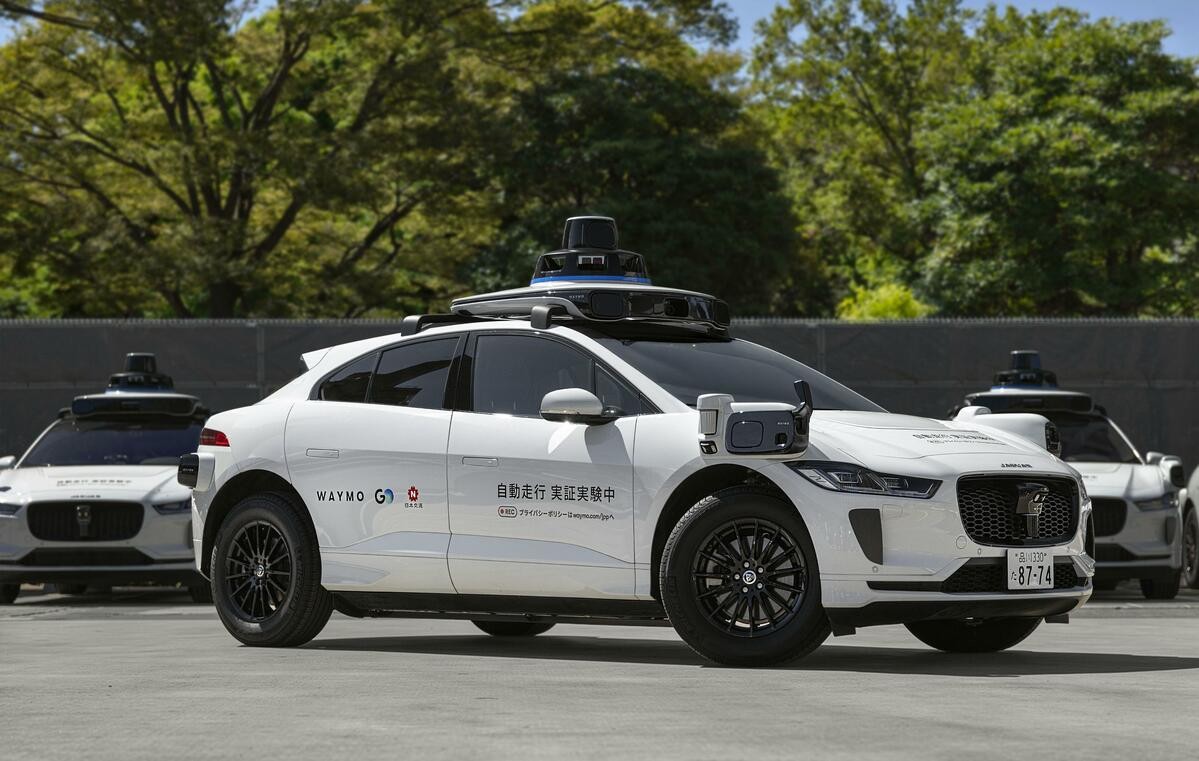
Launch vehicles are to be battery-electric Jaguar I-PACE cars fitted with Waymo’s fifth-generation Driver. GO will design how Waymo’s technology is folded into Japan’s taxi industry and will offer trips in the GO app alongside conventional taxis. Waymo will supply the driving system, operations tools, and trips in its own app. Nihon Kotsu, Tokyo’s largest taxi operator, will handle operations management and depots. The commercial product is described as Level 4 automation: the system handles the driving under specified conditions.
“Users will be able to hail both conventional taxis and autonomous trips with Waymo directly through the “GO” taxi app. To deliver this new mobility experience, we are launching as a full commercial service.”
Photo: Waymo / GO / Nihon Kotsu
“Scaling autonomous mobility requires relentless dedication to safety and execution. Today, Waymo delivers over half a million trips each week while demonstrated to be over 15 times safer than human drivers.”
Those trip and safety figures are Waymo’s. They have not been independently audited in this dispatch. Mawakana said the Tokyo project builds on commercial fully autonomous trips across 15 major U.S. cities.
“The pride we have taken in providing safe, reliable, and comfortable high-quality transportation — a value we have cherished throughout our nearly 100 years of history of operating taxi services in Tokyo — remains unchanged even in the era of autonomous driving.”
Photo: Waymo / GO / Nihon Kotsu
Wakabayashi said fares are intended to follow the same thinking as Japan’s existing authorized taxi fare system, and that the work would coexist with human-driven taxis. The partners said an on-demand, 24-hour unmanned taxi would complement Tokyo’s rail network and is intended to help with an aging population and future driver shortages.
Photo: Waymo / GO / Nihon Kotsu
Ichiro Kawanabe, chairman of GO and of the Japan Federation of Hire-Taxi Associations, told the Tokyo briefing that autonomous taxis could reduce traffic accidents and ease labor shortages, and that safety would be the first priority. Land minister Yasuyuki Kaneko, speaking after a cabinet meeting, called the agreement “a major step” toward a government aim of 10,000 automated bus, taxi, and truck service vehicles by fiscal 2030, Jiji Press reported.
Japan already runs some automated buses and other vehicles, mostly on fixed routes. A fully driverless taxi hailed by app in central Tokyo would be a different product. Nissan Motor and Uber have said they will cooperate on a separate robotaxi project, with trial operations in Tokyo planned for the latter half of this year.
Waymo’s Japan work began with data collection in Tokyo in 2025 using human-driven I-PACE vehicles — its first public-road operations outside the United States. The companies said they are expanding local engineering and operations teams and working with ministries and wards on the licenses still required before an empty cab can pick up a paying rider.
Kenji Watanabe, Asia desk. Kenji Watanabe is a senior correspondent covering autonomous mobility across Asia. Previously reported from Tokyo and Shenzhen for regional outlets; based in Tokyo.
Invited passengers can take driver-out trips on a 22-kilometer public-road route in the Croatian capital, which Pony.ai called a European first for its joint-deployment model.
Customers in Austin can now book the two-seat, steering-wheel-free Cybercab in Tesla’s Robotaxi app. Texas lists 45 of the vehicles against a much larger Model Y robotaxi fleet.
DiDi Autonomous Driving opened fully driverless service trials of its R2 robotaxi, built with GAC Aion, for bookings in selected demonstration zones via the DiDi app.