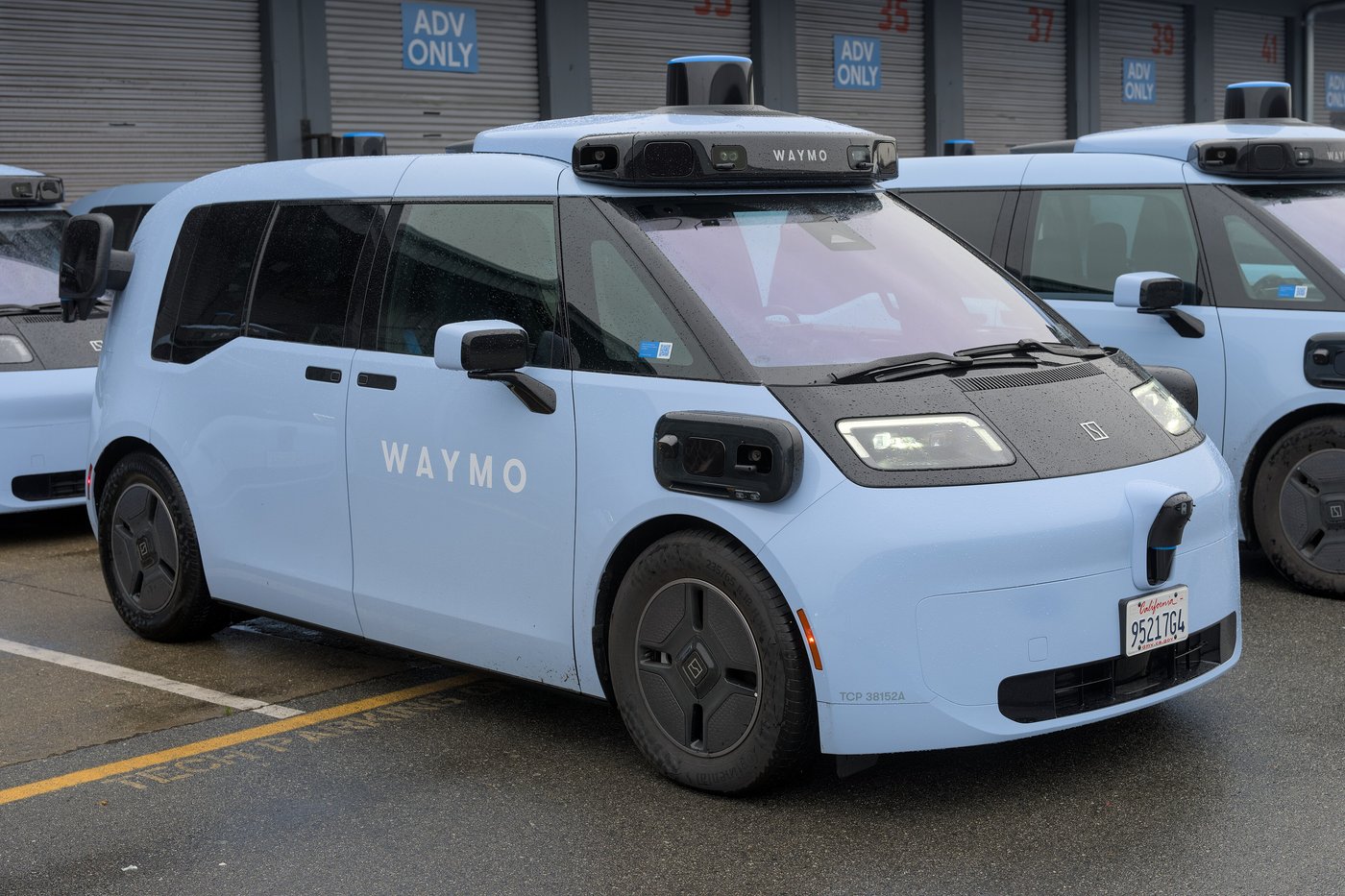
MOUNTAIN VIEW - Waymo said on Thursday that it had closed a $5 billion term loan, the first time the Alphabet-owned robotaxi company has turned to debt to pay for its growth after years of relying on its parent company and equity investors.
PIMCO, Blackstone and Sixth Street led the loan as syndicated lenders, with Capital Group, Loomis Sayles and T. Rowe Price as significant lenders, the company's chief financial officer, Steve Fieler, wrote in a blog post. Apollo, Blue Owl, Diameter Capital Partners, Franklin Templeton, Fidelity Management & Research Company, HPS Investment Partners and Oaktree also took part. Goldman Sachs was the sole lead bookrunner.
Mr. Fieler called the loan "an important step in our evolution into a scaling commercial enterprise." He wrote that the money "will accelerate the continued expansion of our fully autonomous ride-hailing service across the United States and internationally," and that Waymo's momentum had allowed it "to complement our equity financing with debt, providing additional financial flexibility to strengthen our balance sheet."
The deal ended up larger than first planned. When Waymo began negotiating in early September, it was aiming to raise more than $3 billion, Quartz reported. Lenders were set to receive a spread of more than 500 basis points above the benchmark rate, and the debt was expected to carry no credit rating, according to the same report.
The loan follows a $16 billion equity round in February that valued Waymo at $126 billion, TechCrunch reported. Dragoneer Investment Group, DST Global and Sequoia Capital led that round, and Alphabet remains the majority investor. Waymo raised $5.6 billion in 2024, $2.5 billion in 2021 and $3.2 billion in 2020.
A Waymo spokesperson told TechCrunch that the debt would let the company "capitalize on the significant opportunities ahead, especially as a scaling business with proven commercial demand and improved road safety outcomes in the communities in which we operate."
A larger fleet means buying more cars, sensors, charging stations and depots, and lenders are more willing to lend against that kind of equipment, Andrew J. Hawkins, the transportation editor of The Verge, wrote on Thursday, adding that at this stage repaying a loan with interest is cheaper than giving away equity. Uber took a similar step in 2016, when it raised $1.15 billion from leveraged loan investors ahead of its initial public offering, Quartz noted.
Waymo now offers robotaxi rides in 15 U.S. markets. It launched its fifteenth city last month and is testing in London and Tokyo, where it plans to start service. On Tuesday it began fully driverless operations in Detroit, carrying only its own employees for now. The company had roughly 4,000 vehicles in U.S. service as of May and was carrying more than 500,000 paid trips a week across 14 cities in early September, with a goal of one million paid rides a week across 20 cities worldwide by the end of the year, Quartz reported.
The expansion has also drawn regulators. The National Highway Traffic Safety Administration is investigating how Waymo vehicles behave around stopped school buses and a crash in which a Waymo struck a child near a school at about six miles per hour, causing minor injuries. The National Transportation Safety Board opened its own investigation this year after Waymos were seen illegally passing stopped school buses in at least two states, TechCrunch reported.