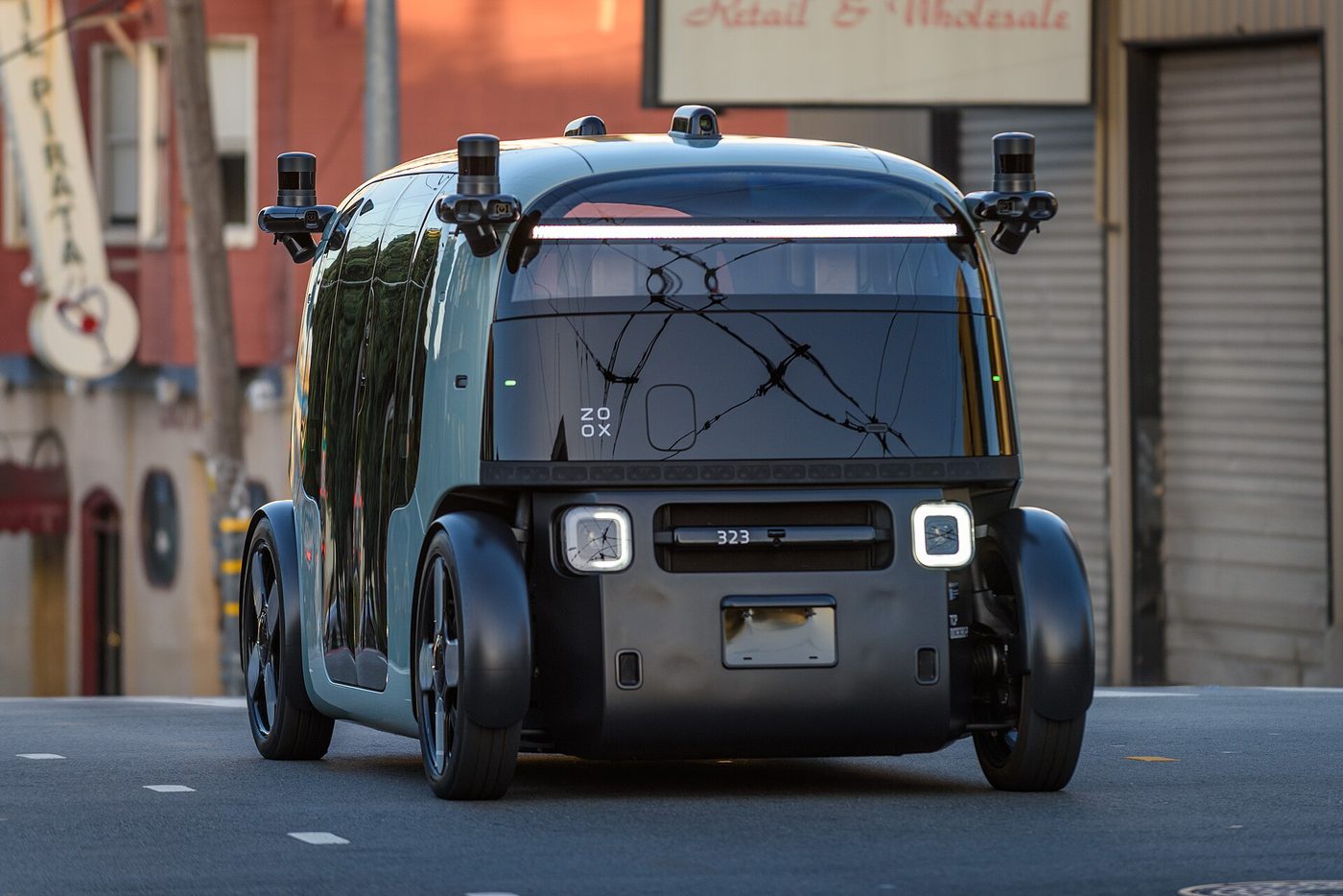
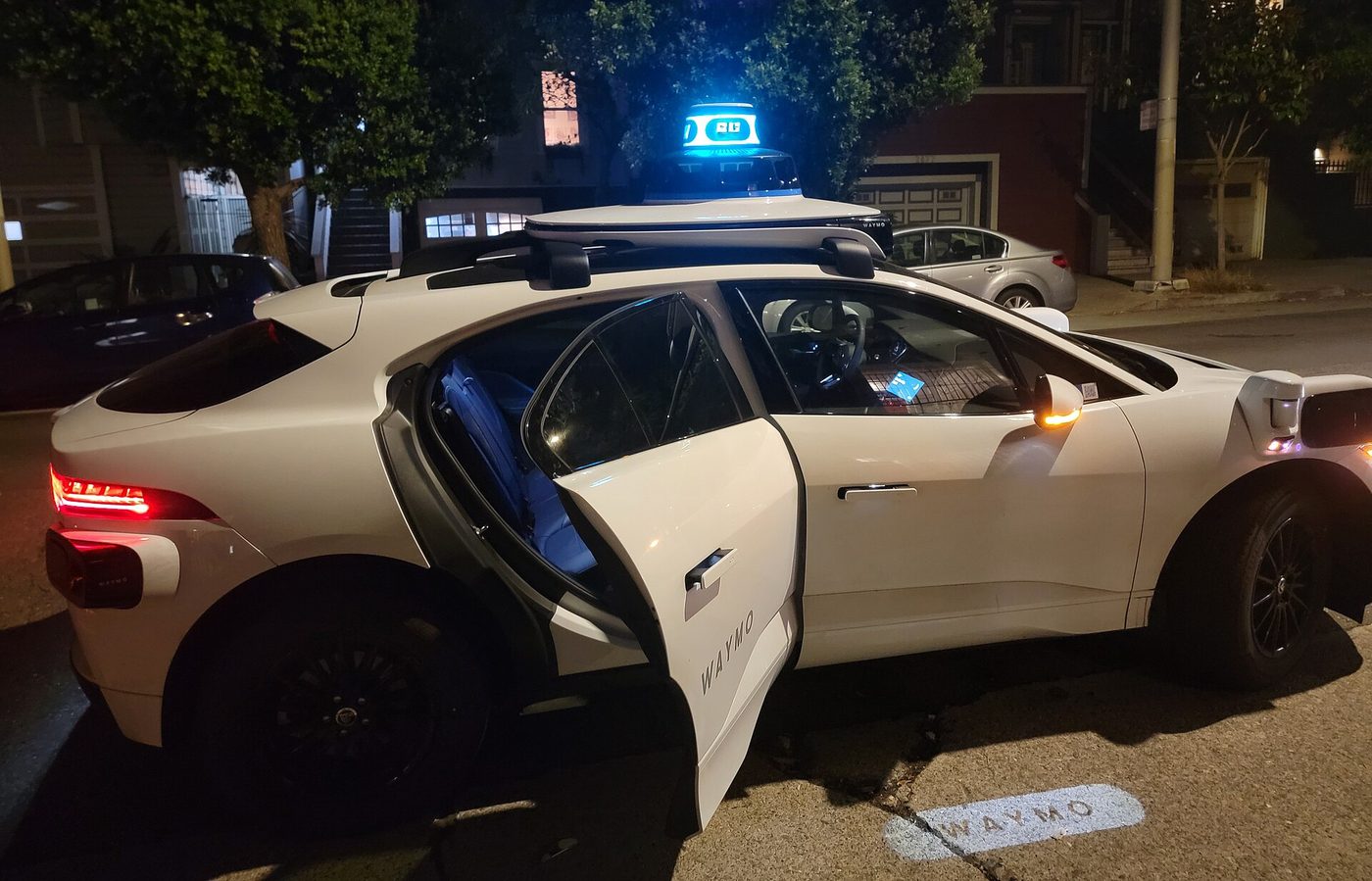
WASHINGTON - Federal auto safety regulators on Friday proposed a standard blue-green light that driverless cars could switch on to tell police, pedestrians and other drivers that no human is in control, part of a broader rewrite of the nation's vehicle lighting rules for cars built without steering wheels or pedals.
The National Highway Traffic Safety Administration said in a notice of proposed rulemaking, filed for public inspection on Friday and scheduled to appear in the Federal Register on Monday, that it would allow "cyan-colored ADS marker lamps" as optional equipment on vehicles with automated driving systems. The agency would not require the lights, but any manufacturer that fits them would have to follow a single federal specification.
Under the proposal, a car using the lamps would carry one or two on each of its front, sides and rear, mounted at least 15 inches off the ground, for a minimum of four and a maximum of eight. The lights would burn steadily, could switch on automatically when the vehicle is operating without the expectation that an occupant is watching the road, and would have to switch off when a person is expected to monitor it. All of them would have to turn on and off together, and vehicles without an automated driving system could not have them.
NHTSA said it chose cyan, the blue-green color defined in the SAE J578 industry standard, because amber, red and white already carry fixed meanings on the road. The proposal largely follows SAE J3134, an industry standard for automated driving marker lamps, the agency said, and it is asking for comment on the color and on whether the lamps should be allowed to flash to signal a vehicle's intended movement.
The agency said it lacked sufficient information to conclude that there is a safety need to require the lights on every vehicle with an automated driving system. It said standardizing them could reduce confusion by making clear what cyan means, but that it could not estimate the potential safety benefits or the number of vehicles affected, given how early the market is.
The notice cites work by Mercedes-Benz, which presented a marker lamp concept to United Nations lighting experts in 2024 and, according to NHTSA, ran a two-year on-road validation of the lamps in California from 2023 to 2025 using five vehicles. It also cites an international survey of more than 4,400 drivers in Britain, Japan, the United States and Germany, in which a majority in each country said vehicles driven by automated systems should carry a marker lamp.
The same proposal would strip requirements that assume a human driver from vehicles that have no manual driving controls, including rules covering turn signal, hazard warning and beam switching controls inside the cabin. NHTSA said that without such changes, makers of those vehicles would seek exemptions from the standard rather than install equipment that serves no purpose. It would also change how certain headlamps are tested so lamps designed for voltages other than 12.8 volts can be measured on equal terms, and drop requirements tied to vertically stacked headlamps.
Comments will be due 30 days after the notice is published, according to the proposal, docket NHTSA-2026-1519. The rule would affect robotaxis such as those run by Waymo and Zoox, whose purpose-built vehicle has no steering wheel, and comes a month after NHTSA opened an audit query into how Tesla certified its Cybercab, which also lacks a steering wheel and pedals, The Verge reported.