LAUSANNE - Did you know that Switzerland's first metro is also the steepest metro line in the world, and that nobody drives it? Lausanne's M2 opened to regular passengers on 27 October 2008, and its fully automated trains have been climbing from the shore of Lake Geneva at Ouchy to the hills above the city ever since, on gradients of up to 12 percent.
Commercial service began when the first train left Ouchy at 5:26 a.m. bound for Croisettes, Railway Gazette International reported that day. The 6-kilometer route climbs 338 meters in an 18-minute ride. The line took four and a half years to build at a cost of 700 million Swiss francs and opened with a fleet of 15 two-car, rubber-tyred Alstom trainsets, sized for an expected 25 million passengers a year. Swissinfo reported that the first train was packed with some 200 local politicians, officials and curious passengers, and that the 18-minute climb halved the previous journey time.
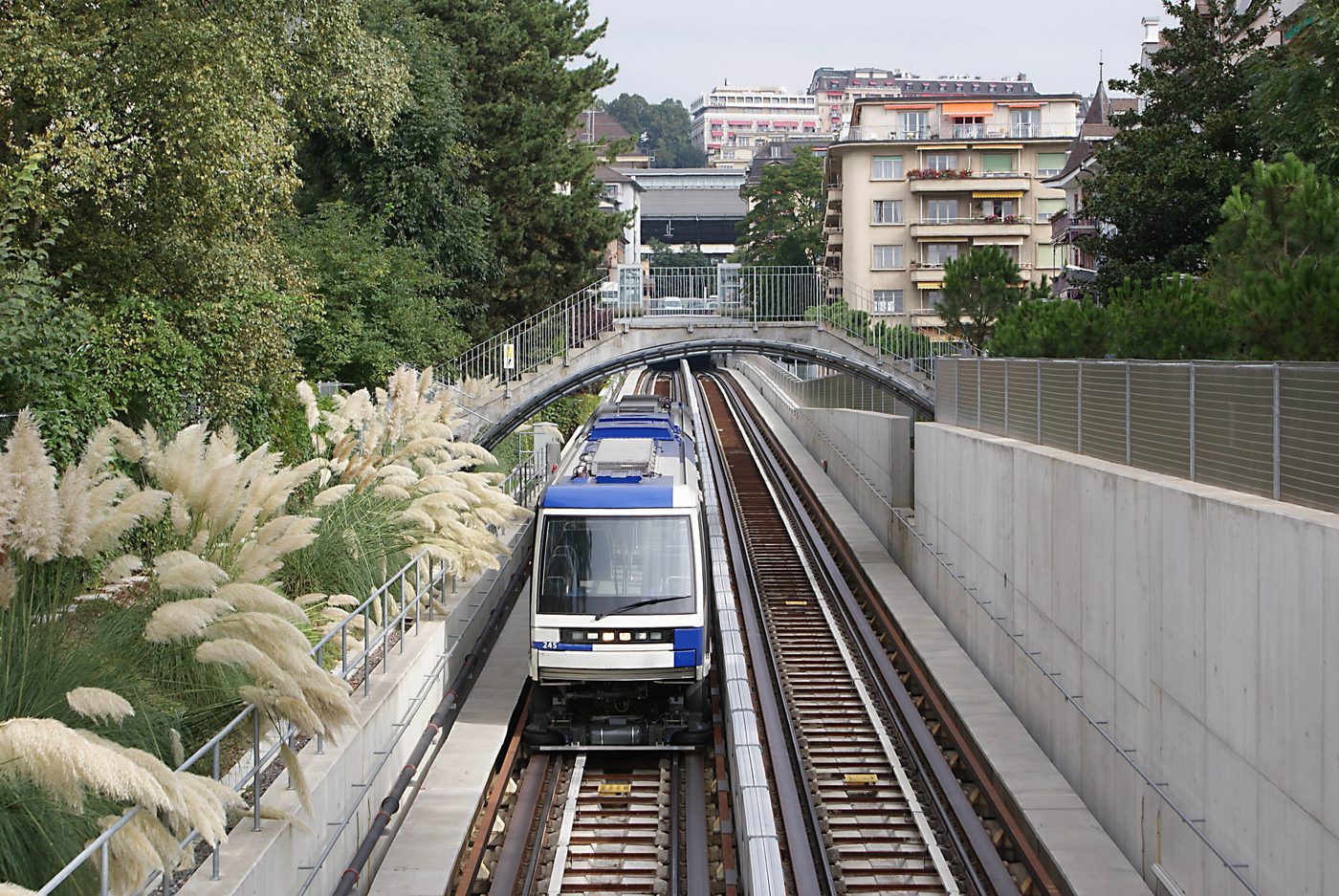
Alstom, which signed the contract in 2000, supplied the automated trains and traffic control systems and built and electrified 13.4 kilometers of track. In a September 2008 release the company said its 12 percent incline was the highest gradient in the world for a metro line. Swissinfo put the average slope at about 6 percent, with the steepest sections at 12 percent, and called that a world first.
The start was not entirely smooth. Regular service had originally been planned for between 15 August and 15 September 2008, but it was pushed back to 27 October because of computer weaknesses, Swiss broadcaster RTS reported. Olivier Français, the Lausanne city official in charge of the works, told reporters the opening still came seven weeks ahead of the date announced in November 2002. Some 160,000 people had already tried the blue and white trains during the inauguration weekend of 18 to 21 September, according to RTS.
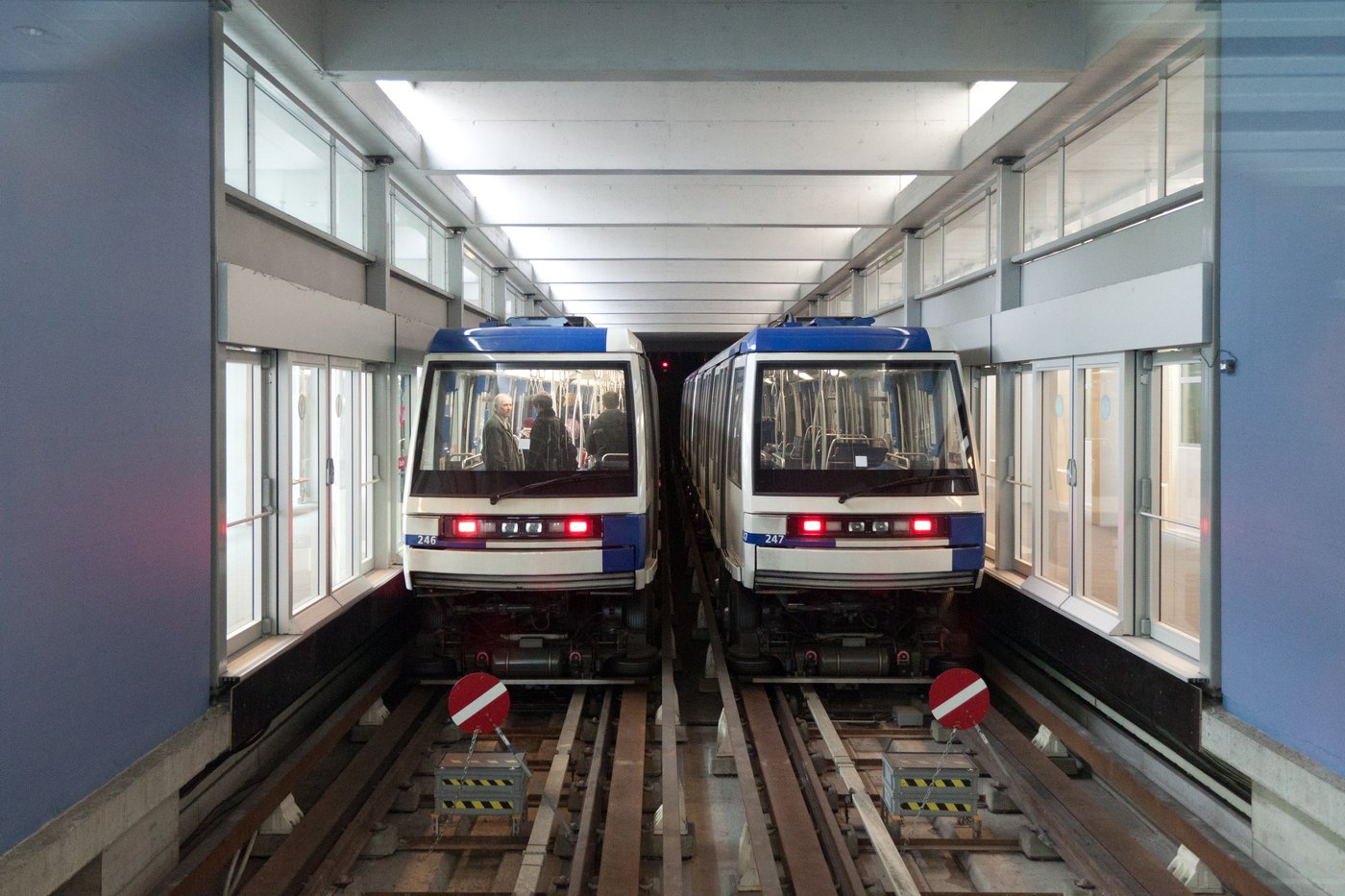
The lower half of the route is much older than the trains. It follows the Lausanne-Ouchy line, which opened in 1877 as a funicular and was rebuilt as a rack railway in 1959. Riders nicknamed it La Ficelle, the string, and it closed on 21 January 2006 so the metro could be built. Alstom said it turned that 2-kilometer rack line into a 6-kilometer driverless metro in the space of five years.
At opening, trains ran every three minutes and 15 seconds at rush hour between the main station and La Sallaz, according to RTS. Long before robotaxis began climbing the hills of San Francisco, Lausanne was sending computer-driven trains up a 12 percent grade every few minutes, with no one at the front.